HOW TWO CENTRAL SAINT MARTINS STUDENTS BUILT A NEW YORK BRAND FROM LONDON
Being a student designer at Central Saint Martins is one thing, yet showing your fifth collection at New York Fashion Week is another. For Sharon Mishiev and Taylor-Paige Garvin, studying in London has gone hand in hand with building iseder®, the New York label they have shown at fashion week for the past five seasons.
“I think this one certified our identity and what we were trying to achieve, what we were trying to say for the past five years,” Mishiev says of the latest collection. Having been studying in London, a city known for its NEWGEN support, the question had to be asked: why New York? For the duo behind iseder®, New York is not simply a project setting. Mishiev, a second-year B.A. Menswear designer, and Garvin, an M.A. Fashion designer, grew up there. When they talk about the city, their references are less likely to be the Empire State Building than a taxi ride, a building site, a person on the street or something they remember seeing years ago. “We tried to encapsulate everybody in New York City,” Garvin says. “In the initial process of designing, we kept talking about these different professions in New York City and thought, what does this person look like? What is this person doing?”
For their fifth collection, they aren’t chasing an idealised New York so much as the one they actually grew up in. “I would say a community, not the past,” Mishiev says when asked what the collection draws from. Garvin adds that they have “taken elements of the past” while trying to make them feel contemporary, using their own upbringing in the city as a point of reference rather than attempting to recreate it. The collection takes New York’s contradictions as its starting point: old alongside new, grit beside glamour, with individual lives forming part of a much larger whole. Its silhouettes draw from the innumerable identities moving through the city. “We aimed to find a way to make it a bit more cohesive and put an umbrella over all those different personalities in the city,” Garvin says.

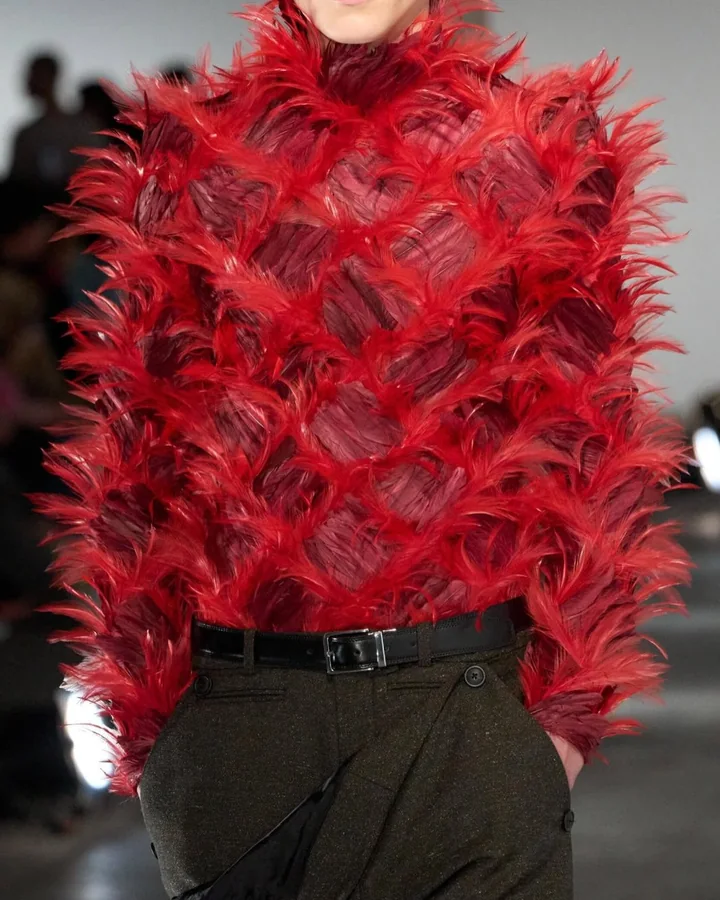
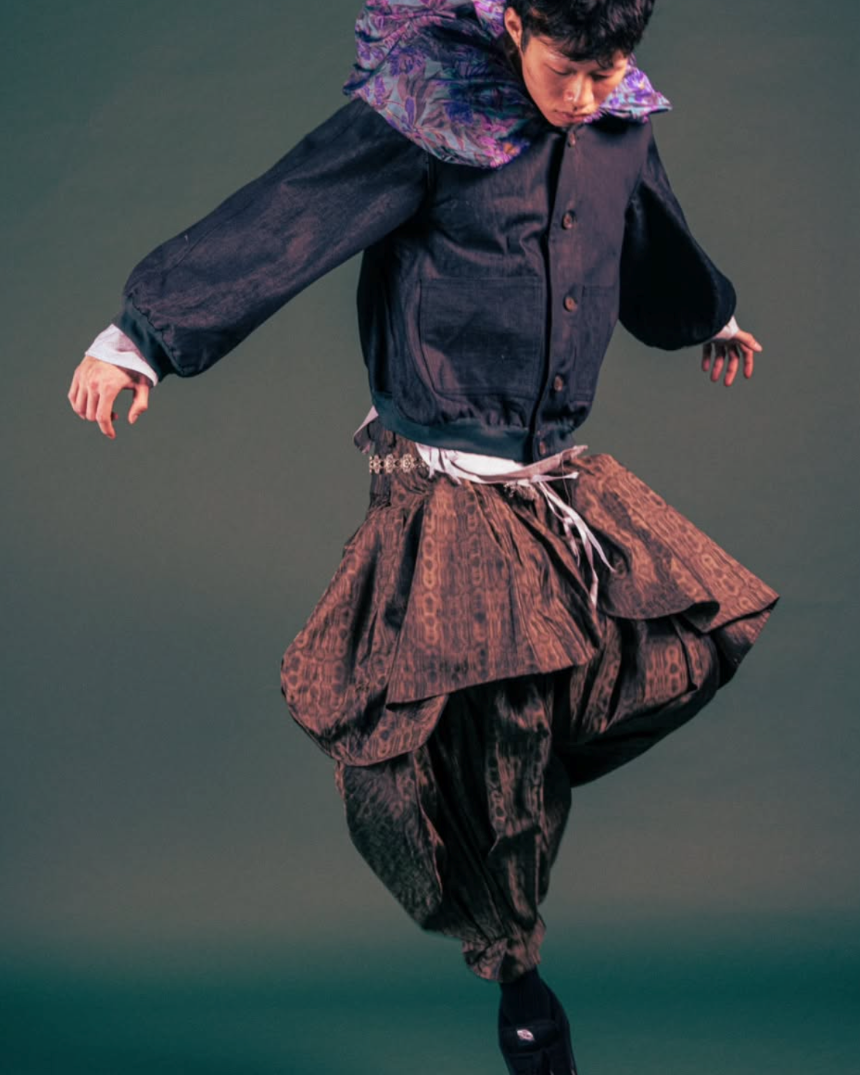
Both Mishiev and Garvin are designers who pull from the most minute details, the most stark example being a pair of waxed, taxi-yellow denim jeans, scuffed and scraped as if they’ve battled with the city for years. The pair took iconography such as this, but also saw the livelihoods that are tied to them. “Our inspiration was actually yellow taxi cabs and the decline of that in New York City culture, just because Uber was taking over,” Mishiev says. “I looked into it and how a lot of immigrants came to New York to spend so much money trying to get taxis or working in them.” Elsewhere, spray-painted surfaces, photo prints, unexpected material combinations, denim, tailoring and details borrowed from the built environment bring together the polished and the unfinished. In all, the collection concerns what happens when things that were never supposed to sit together end up sharing the same space, the purest idea of New York and iseder® itself, having spent its five seasons being made between two cities.
“We’ve taken money from friends and family and try to make it continue to happen,” Mishiev explains about the practical reality of showing each season. “It’s just a cycle of debt that gets repaid every season.” It is a frank admission, but one that captures building a brand while studying: finding collaborators, organising production and making the finances work well enough to return each season. “Finances are always tricky with us,” Mishiev says with a nervous laugh.


The pair arrived at Central Saint Martins with an existing relationship and have continued to develop iseder® alongside their studies, with the college providing another creative environment in which to work. Rather than playing their own parts, the designers seem to have allowed each to feed the other. “The roles definitely overlap,” Garvin says of their partnership. “We’ve tried to distinguish, ‘you do this, I do this,’ but I think naturally it’s impossible for us to be that serious with one another… So we simply just work together.” Seasoned regulars at fashion week, they have become increasingly conscious of the people required to make the brand function. “I think giving a real purpose to everyone on the team to me is very important,” Garvin says. “It’s easy just gather a group of people and say, ‘Hey, I want to do this huge thing,’ but you don’t give them assigned roles. That really taught me the value of making sure you’re working with the right people at all times, making sure that your values align.”
Now both part of a pool of the world’s best emerging creatives, the potential for collaboration is everywhere. “Saint Martins has given us access to people and possibilities that we wouldn’t have encountered. They introduce you to the right people, the right places,” Mishiev says. Yet, according to them, London’s infrastructure for emerging designers is far more robust than what they have experienced in New York. “The grind for an independent designer in New York is much more like you, your team, your friends, your peers,” Garvin says. “But I think in London, there’s a bit more academic support, maybe government support as well.” New York, by comparison, is more improvised. “London feels like there’s a bit more backing in the arts and that there’s a proper rollout. But New York feels like a free-for-all.”


For two designers who grew up there, connection is part of the appeal. They describe New York as the natural setting for the label, not simply because it is where they are from, but because its density encourages community. “I just feel like, in order to really survive, as a business and in the world today, we really have to work as a community,” Mishiev says. “That’s always been our ethos for the past five years.” Garvin describes the city as a place where “there’s almost no such idea of isolation or being on your own”. For the pair, that sense of togetherness extends beyond the label itself, becoming part of how they see the world around them. The collection’s interest in community feels more convincing when you know how the clothes came together. The garments carry fragments of different people, places and experiences, without flattening them into one.
Being away from New York has changed the way they see it. “Not physically being in New York made it much more of a memory game,” Garvin says, “like, okay, you remember this reference, or, we have this photo from our last visit there.” Distance has made them look at the city more closely, developing, as Garvin puts it, “a deep level of appreciation of New York City” and a desire to eventually return home. At the same time, London has become part of that picture. “Because London is so similar to New York, we’re finding that community in London as well,” Mishiev says. “It’s all like a cosmopolitan blend of both cities at the same time and I think we’ve shown that this season more than before.”
iseder® has defined itself not a fixed idea of New York, but an ongoing relationship with the places, people and communities that shape them, whether at home or here in London. As they continue studying, building a business and finding their place within London’s fashion scene, the brand remains something they are learning through experience. “Our next target is presenting ourselves for London Fashion Week through Taylor at M.A. Fashion,” Mishiev says, “and figure out a place where the collection at M.A. could really push us to the next level and give us that institutional backing that we really are eager for. For now, the pair are figuring it out as they go, carrying what they have built in New York wherever they happen to be.