Tuuli Turunen TAKES The Uniform Somewhere Less Polite
Finnish-born, London-based designer Tuuli Turunen’s SS27 collection Ain’t Nice took the clothes of male authority and roughed them up with the frills and nonchalance of the hippie movement. Gabriel Winter talks to the designer after the show.
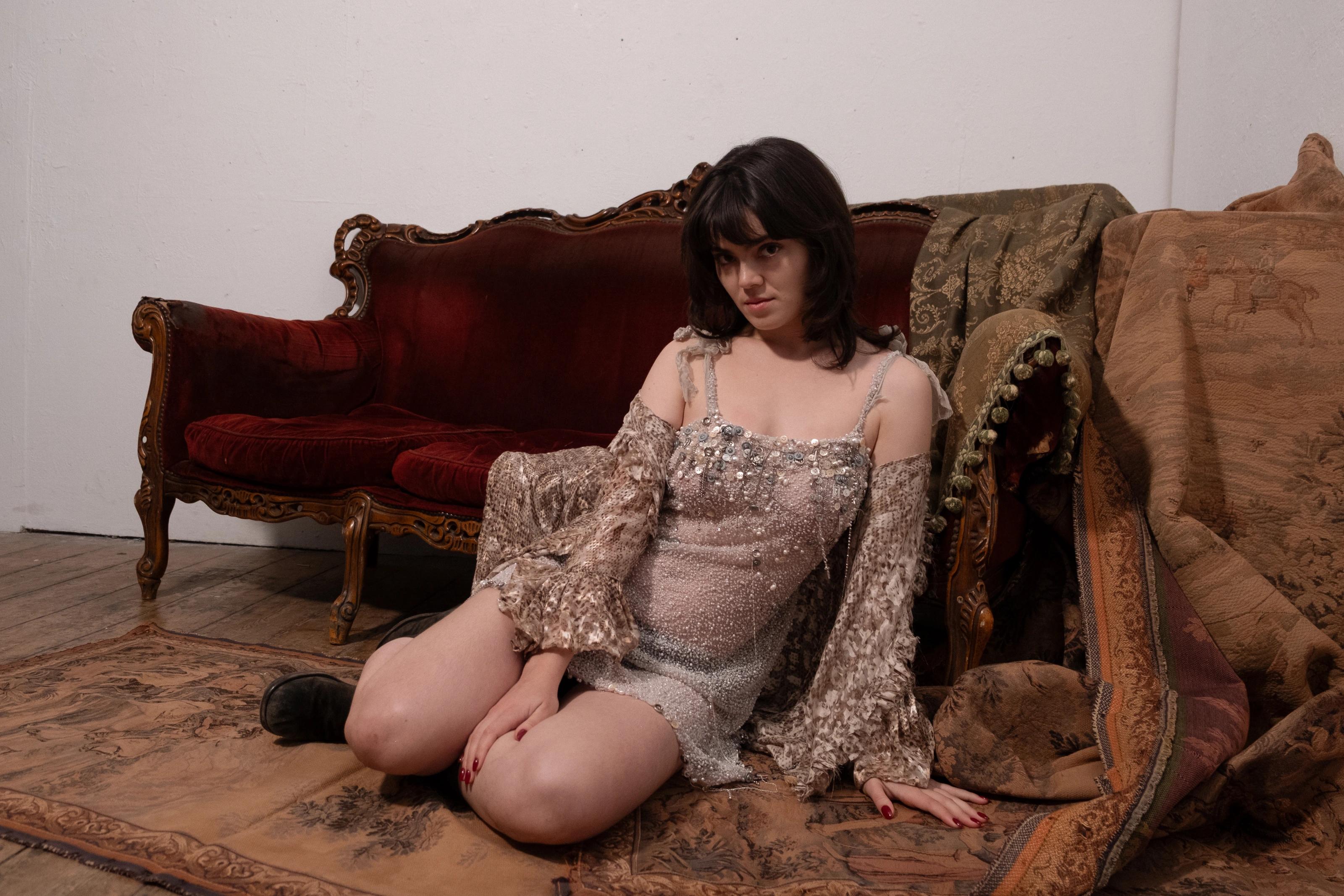
Tuuli Turunen tends to build each collection as a single scene lifted out of a longer story, handing the audience one moment and leaving them to work out what happened either side of it, and the scene she staged at the Candid Arts Trust in Angel on 21 September was a deliberately unruly one.
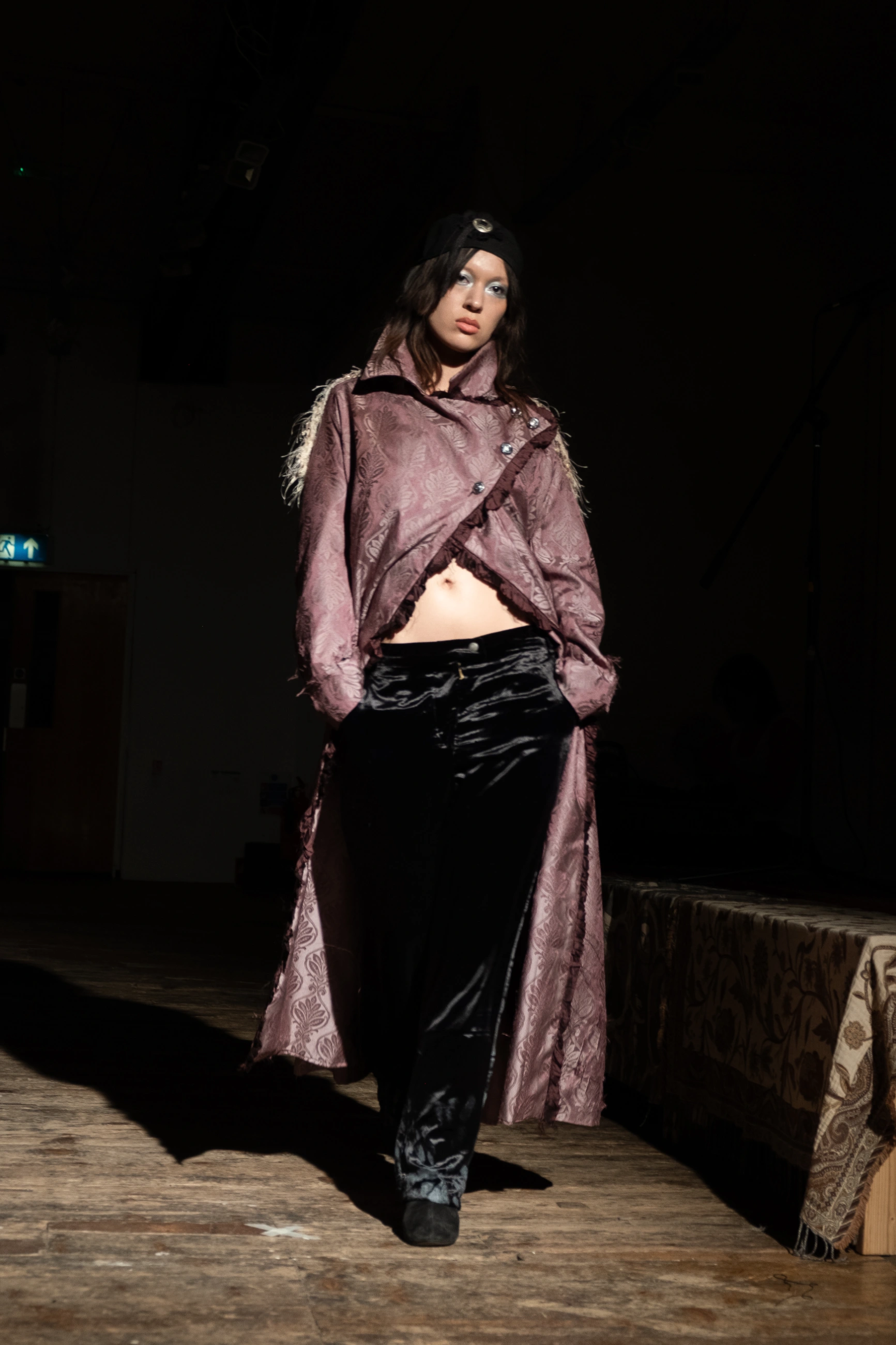
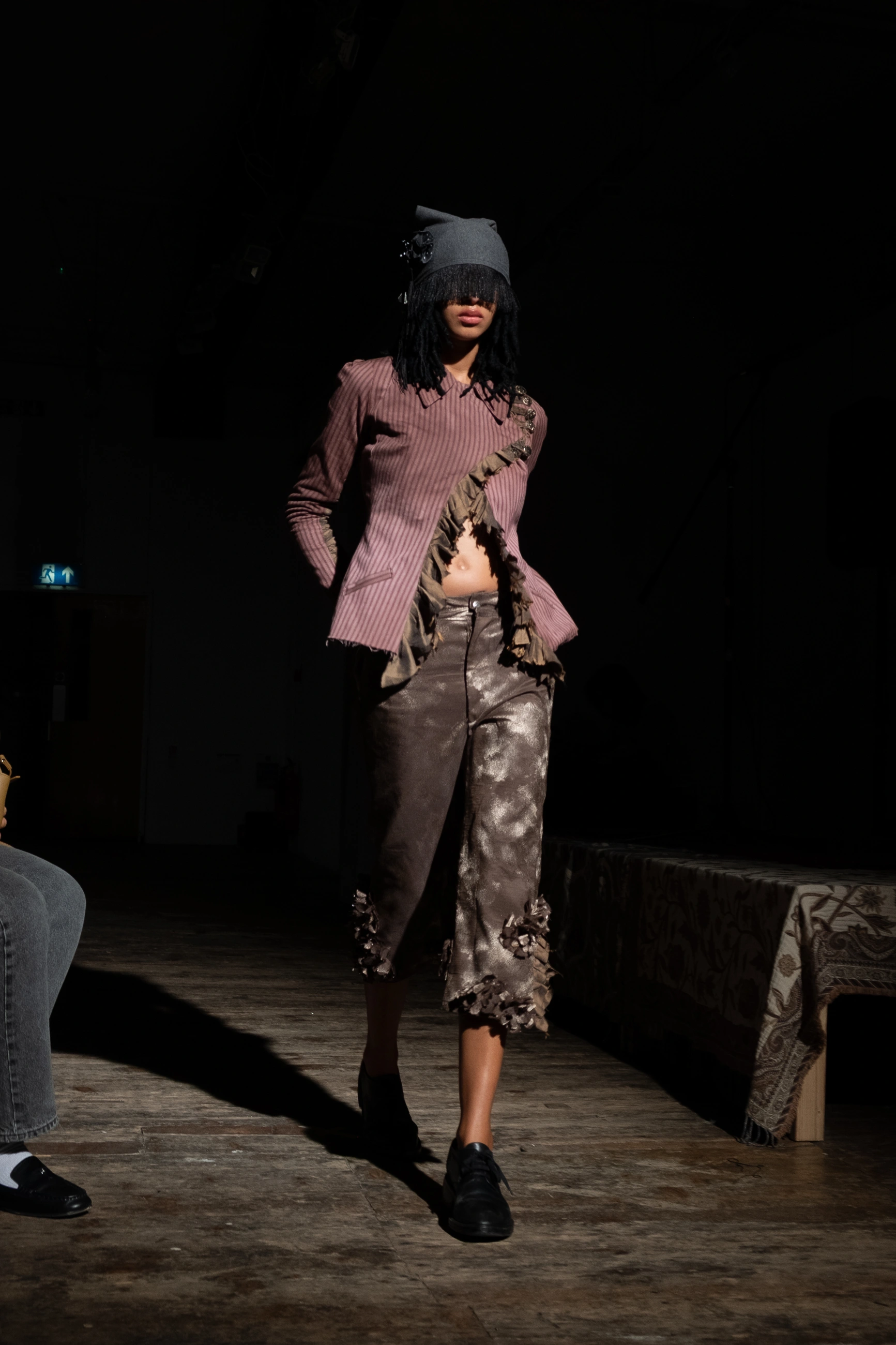
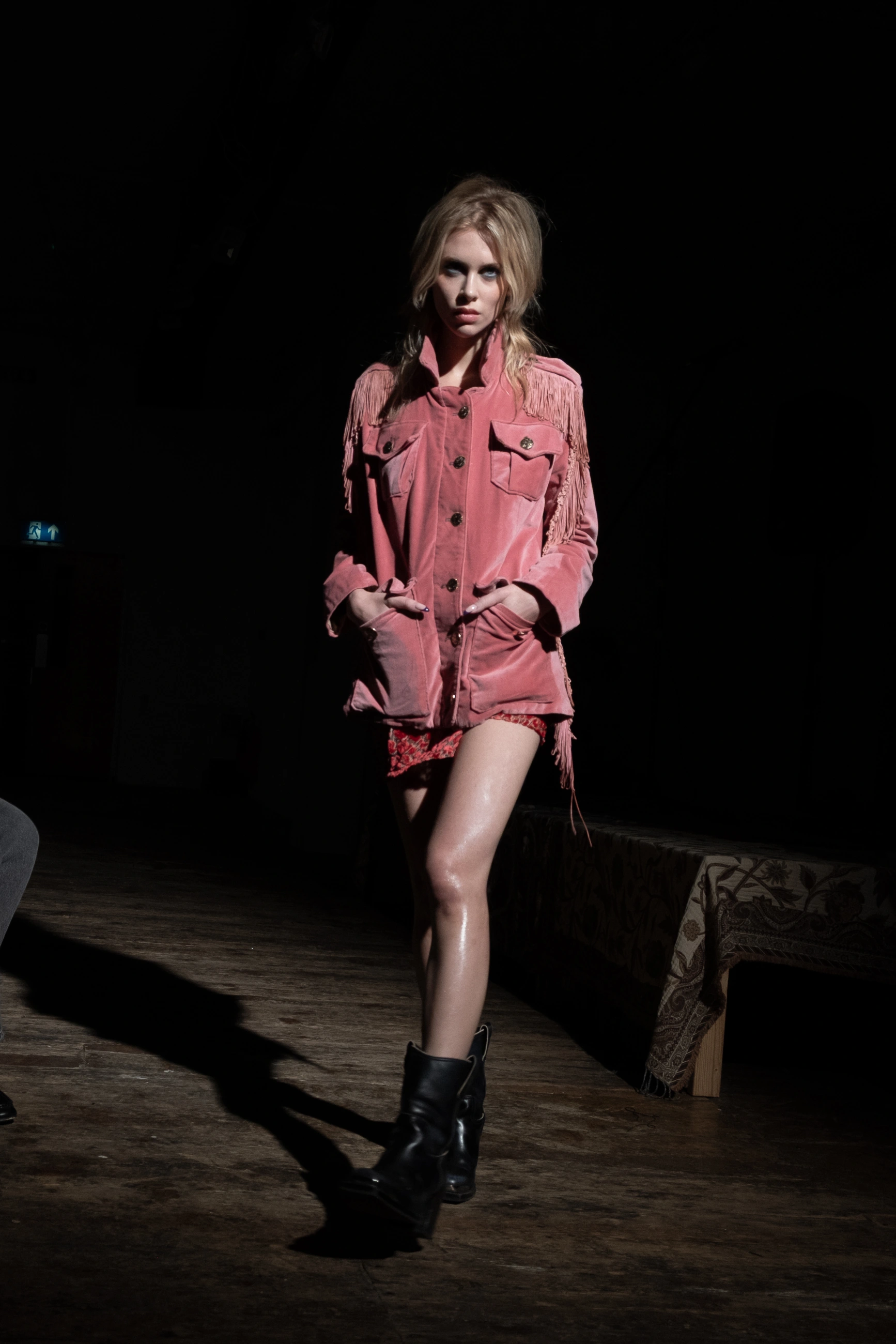
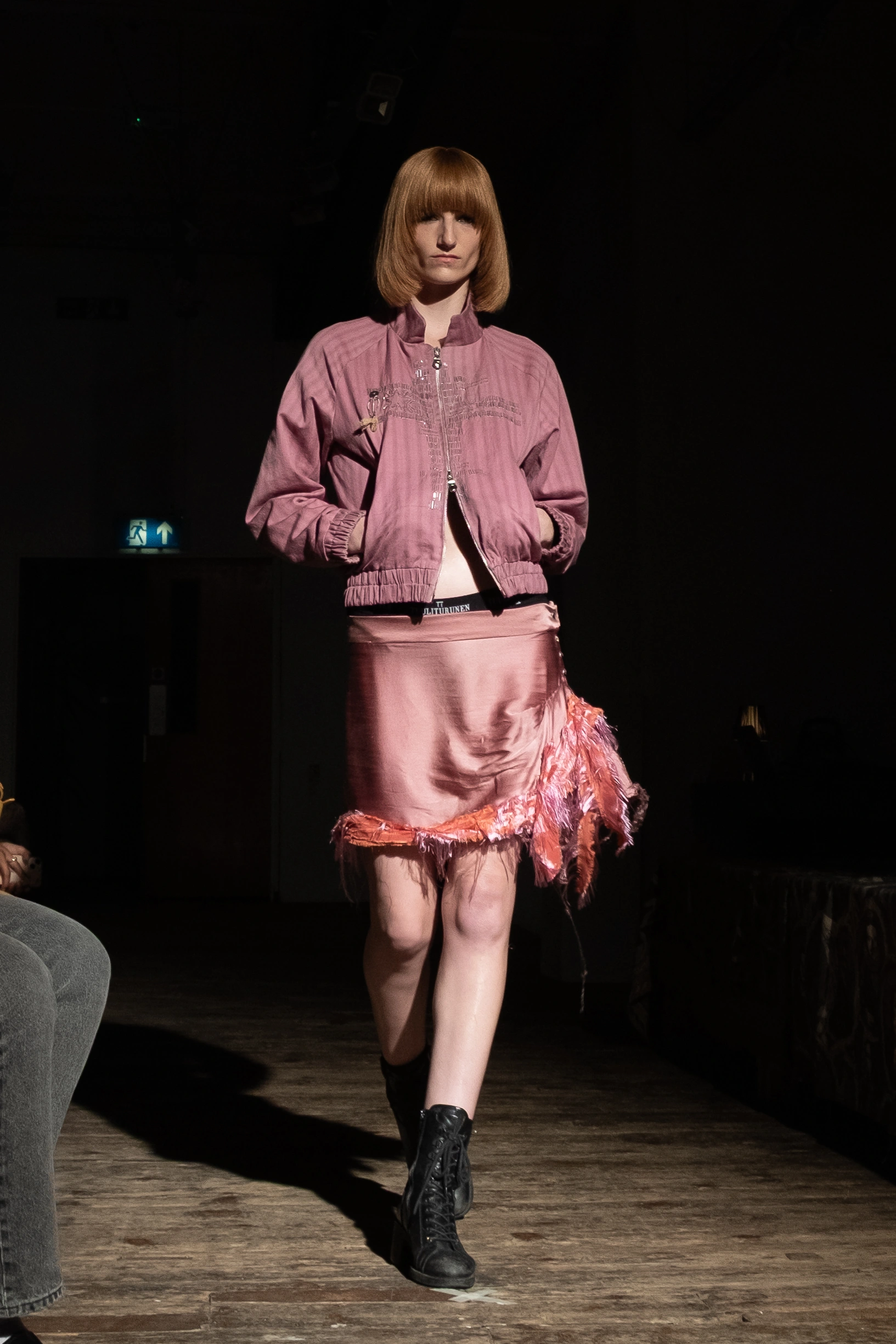
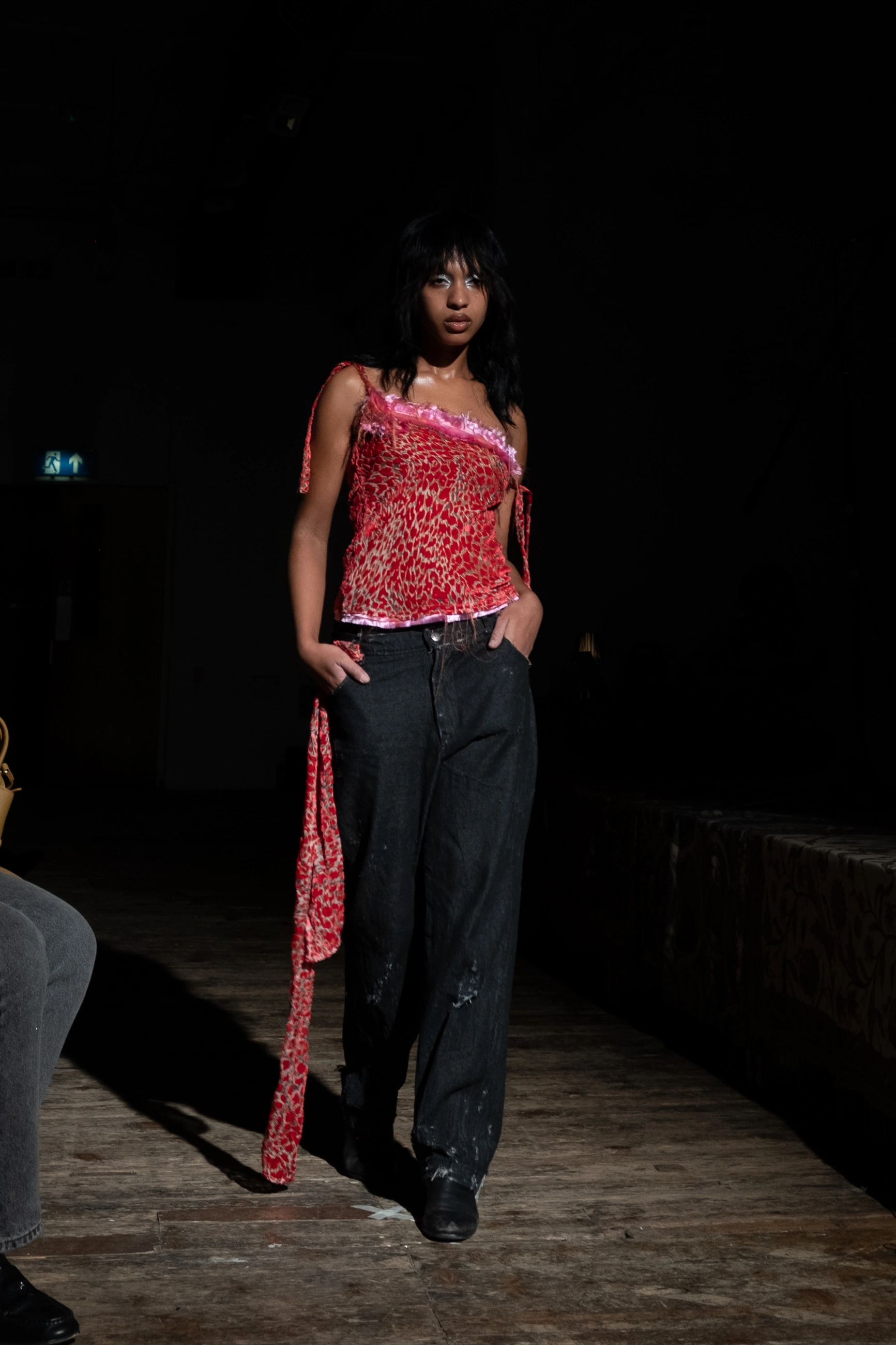
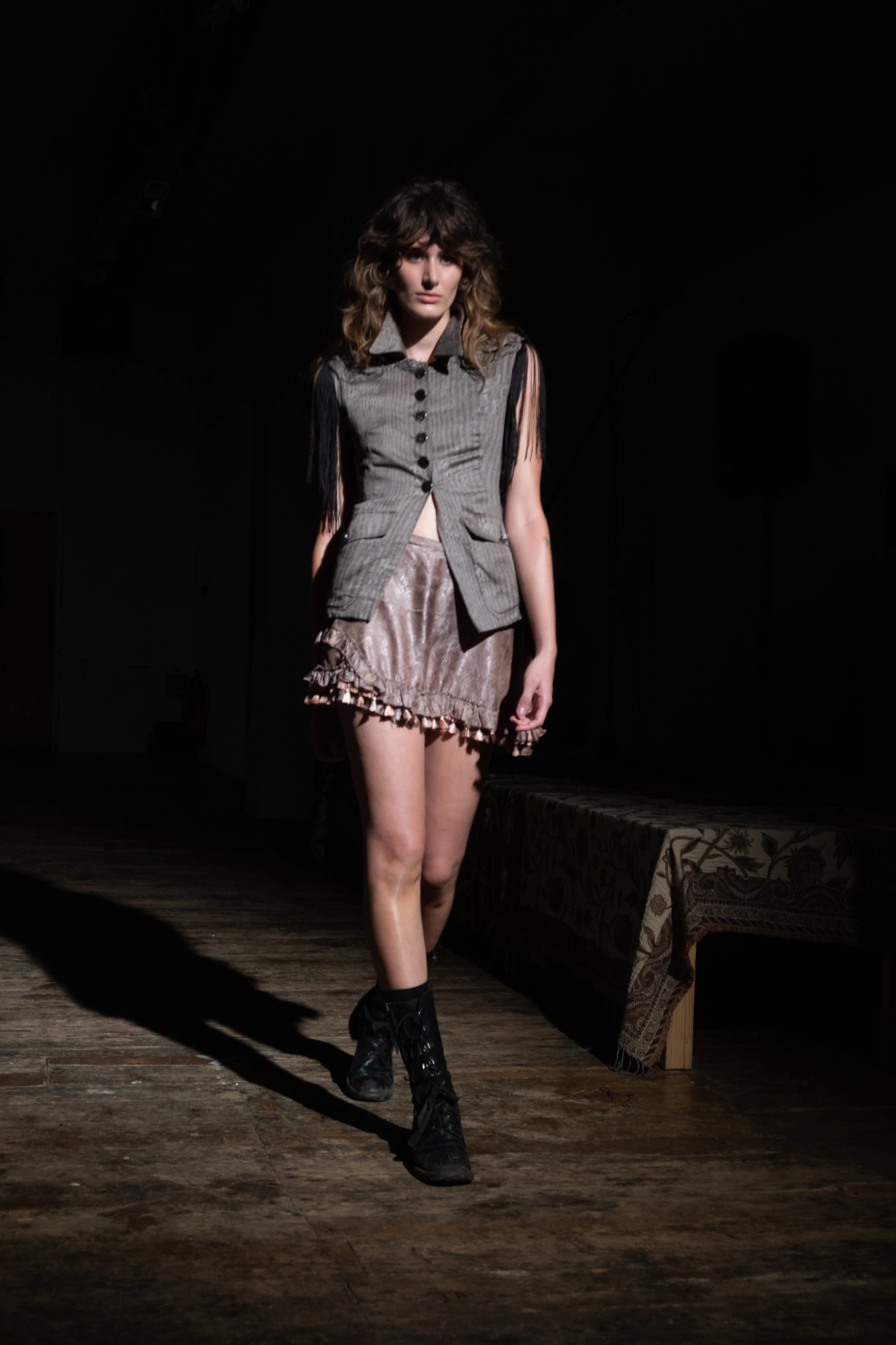
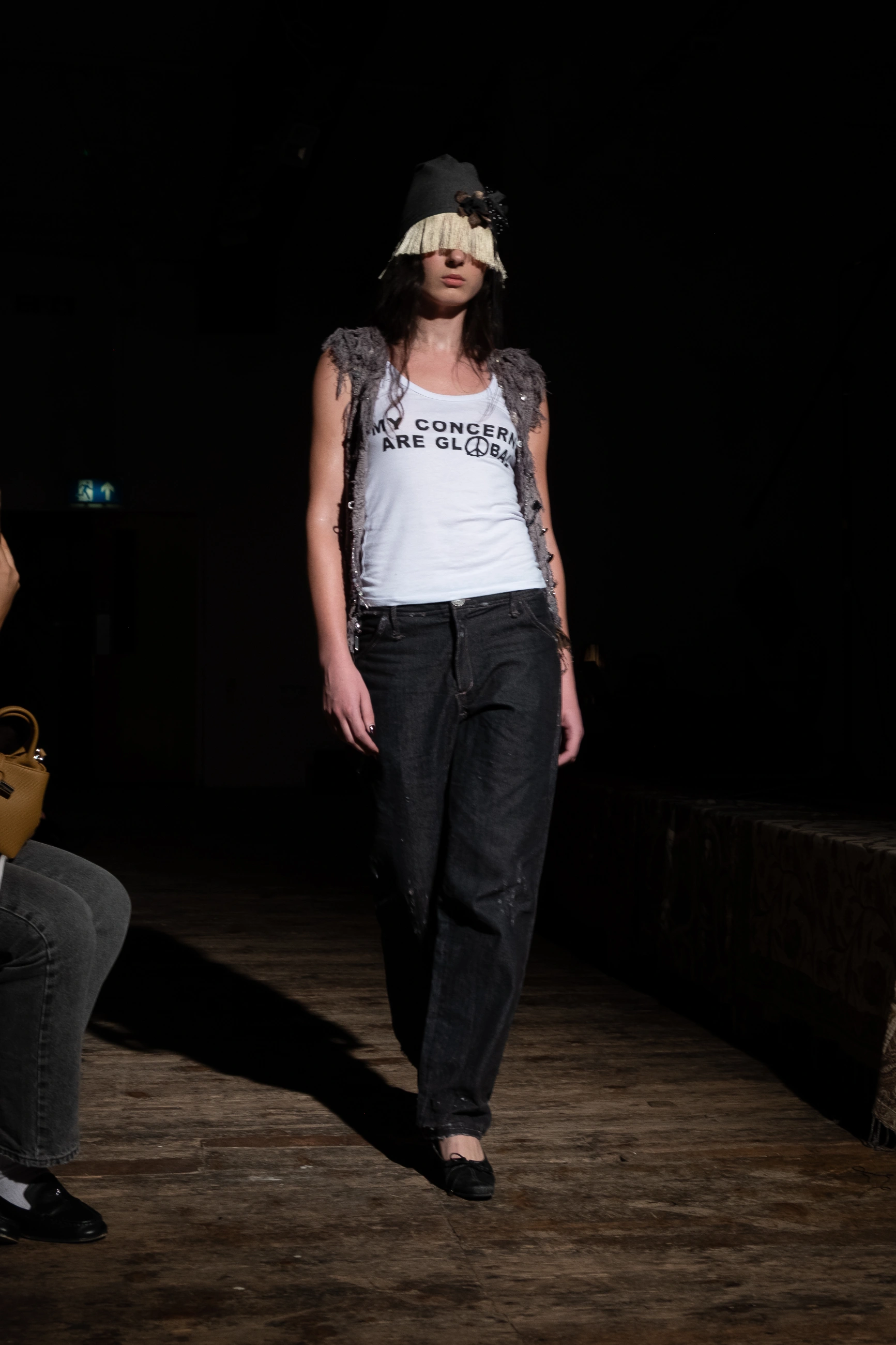
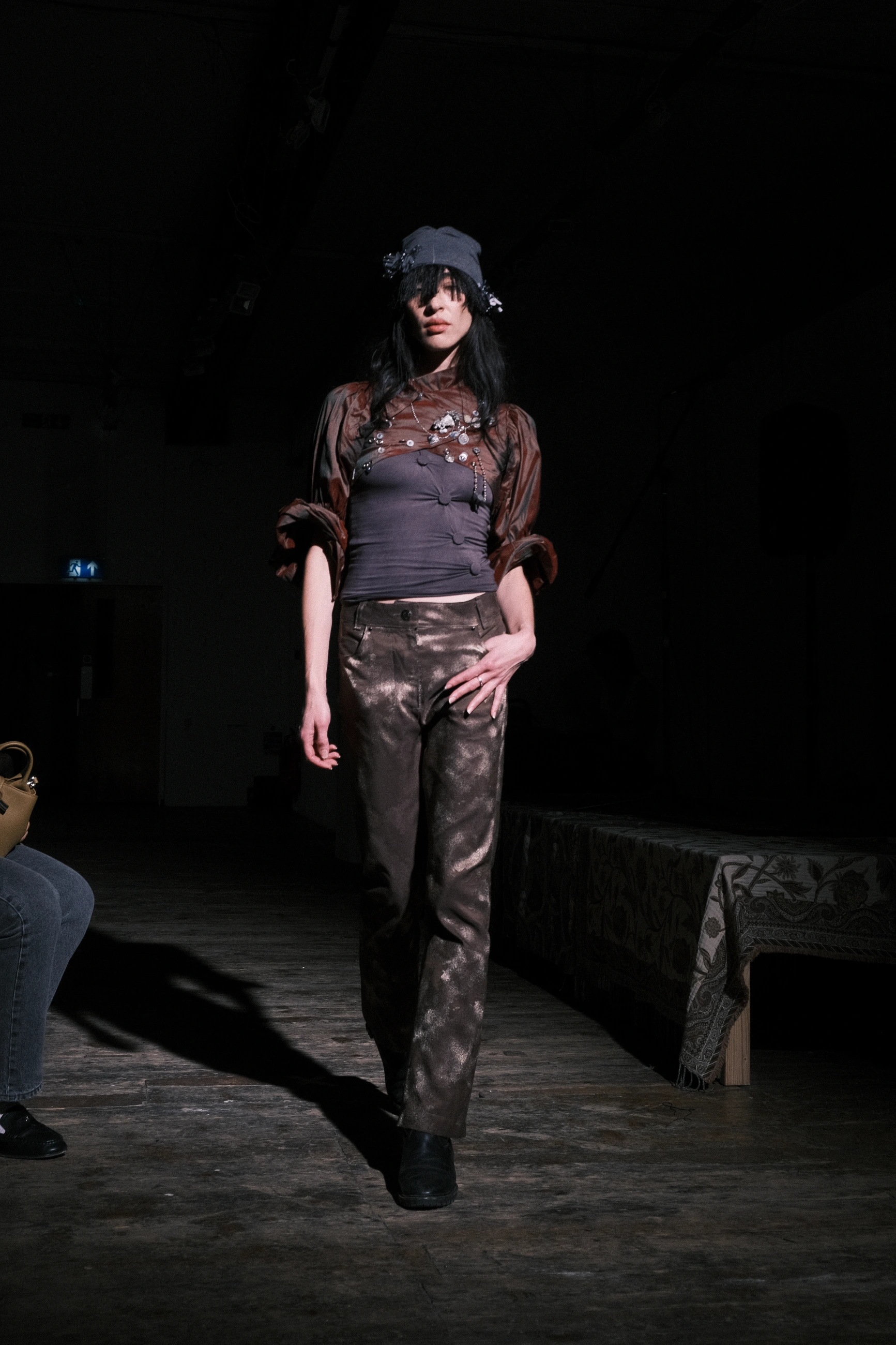
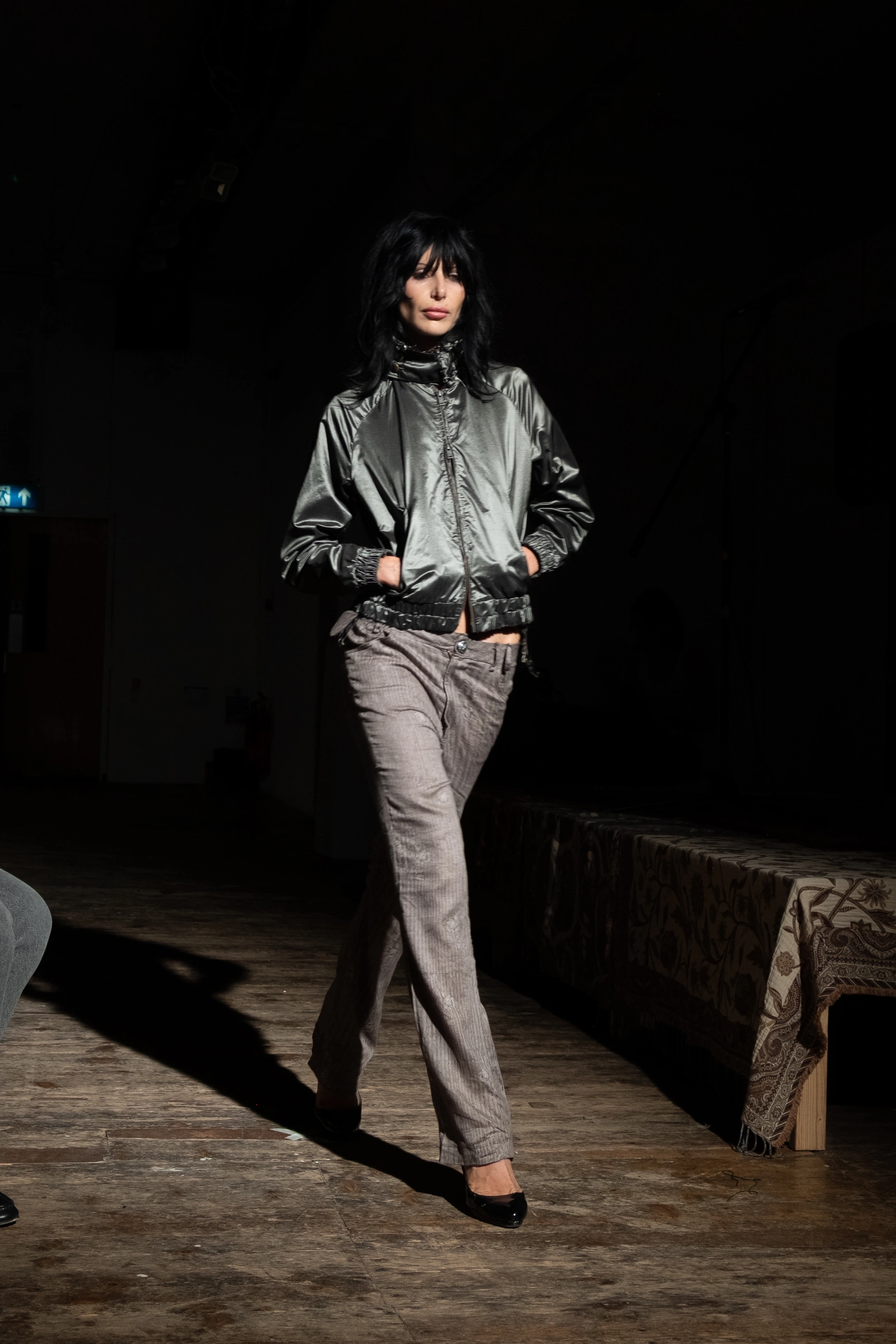
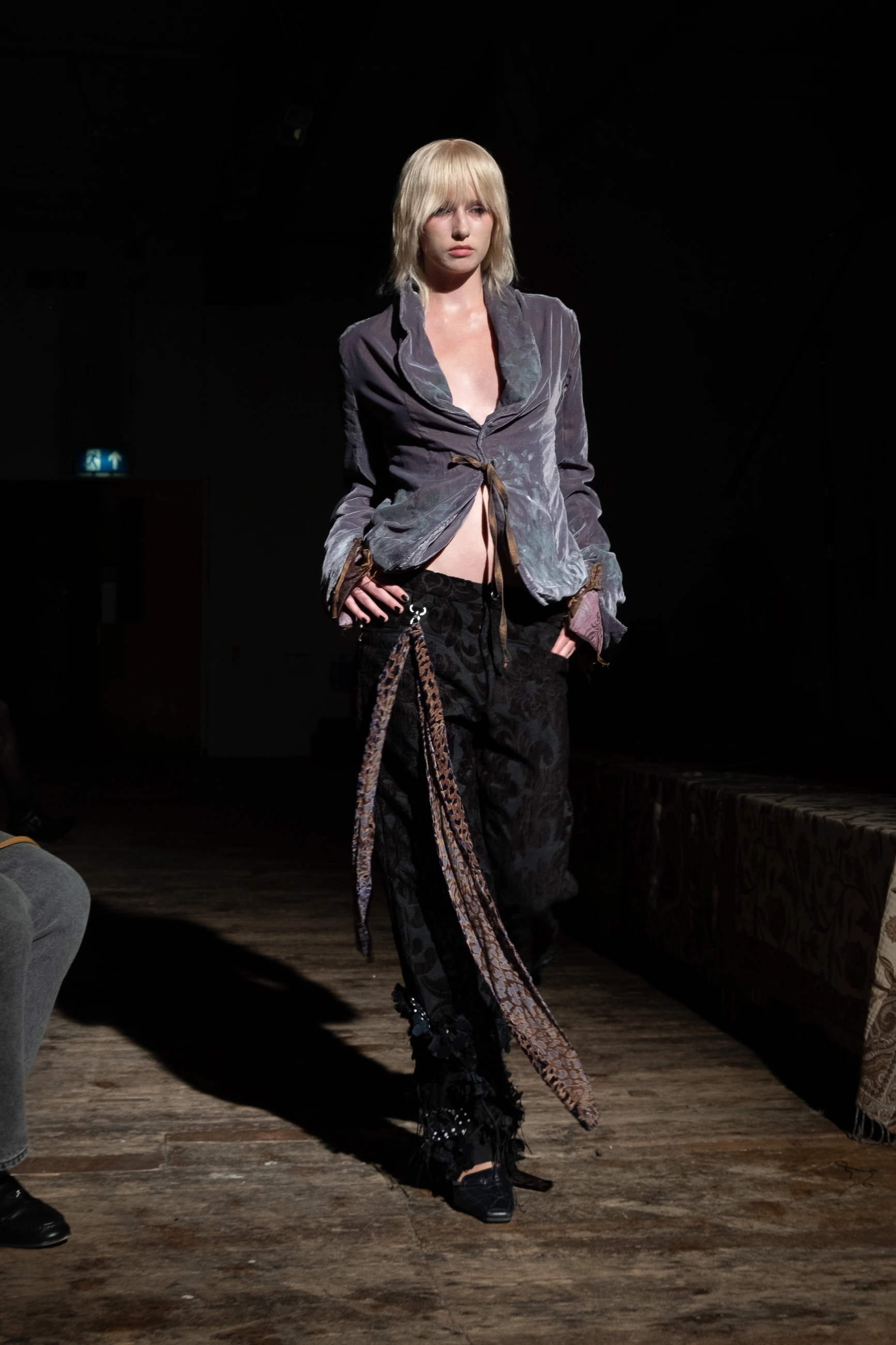
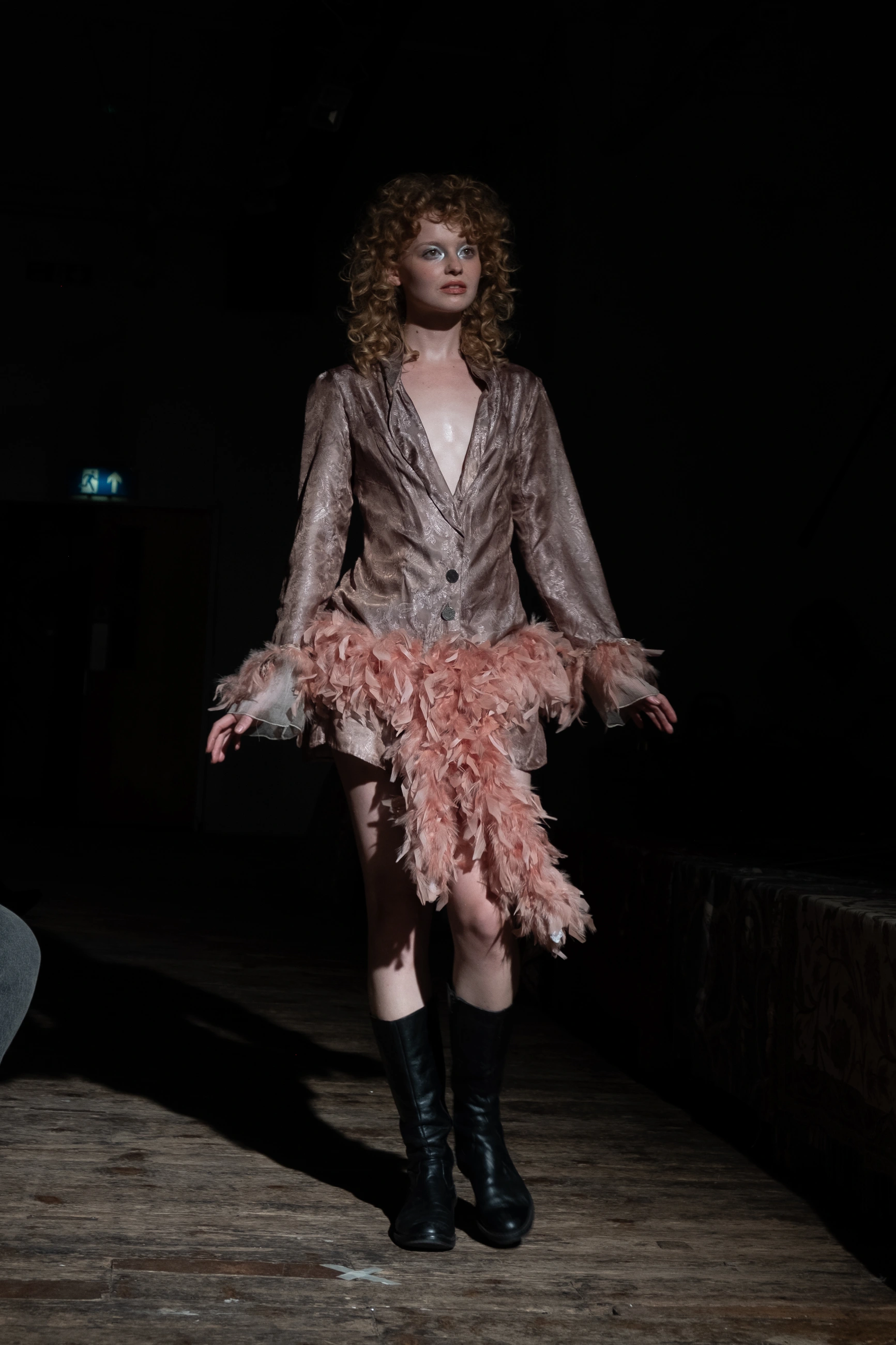
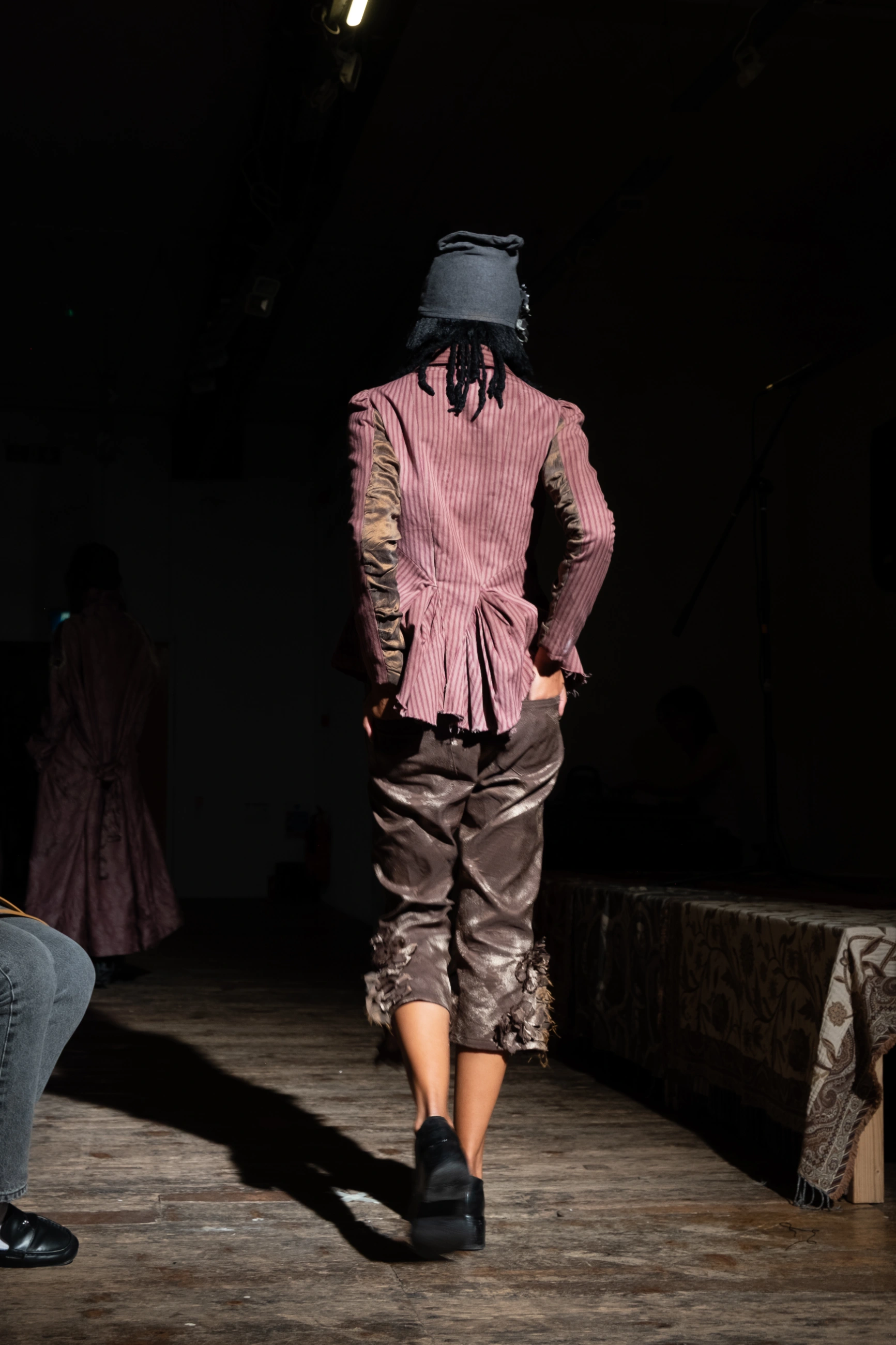
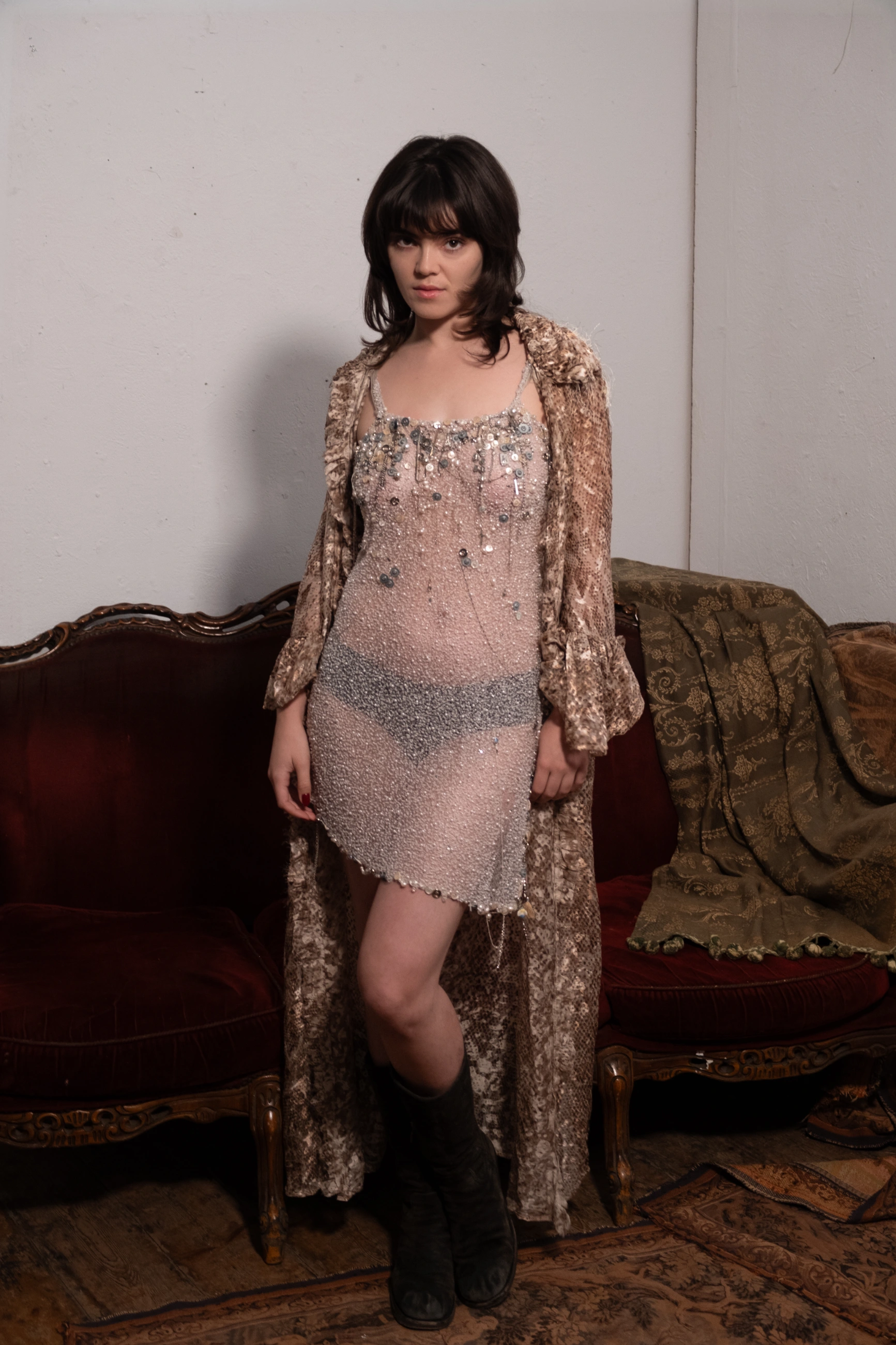
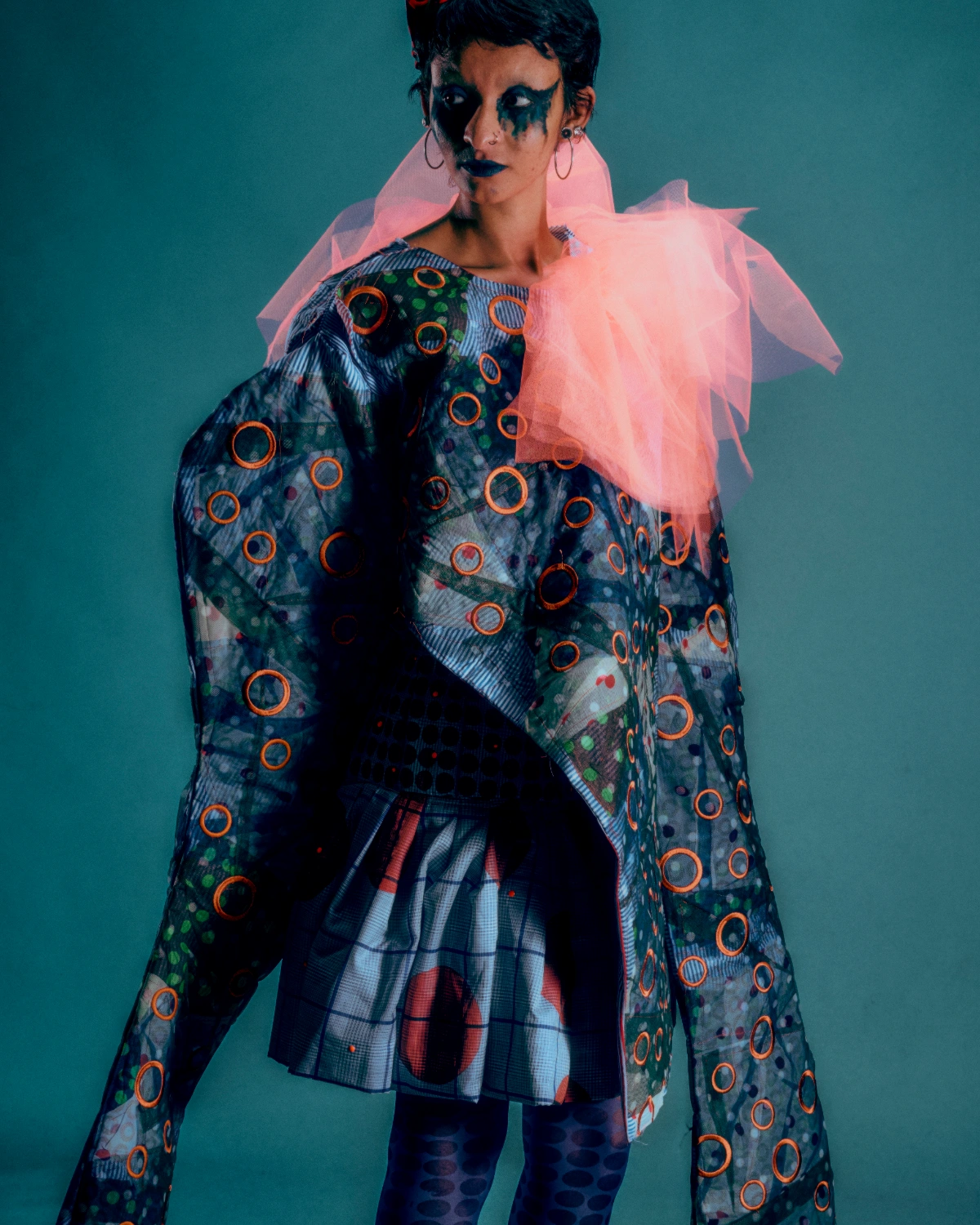
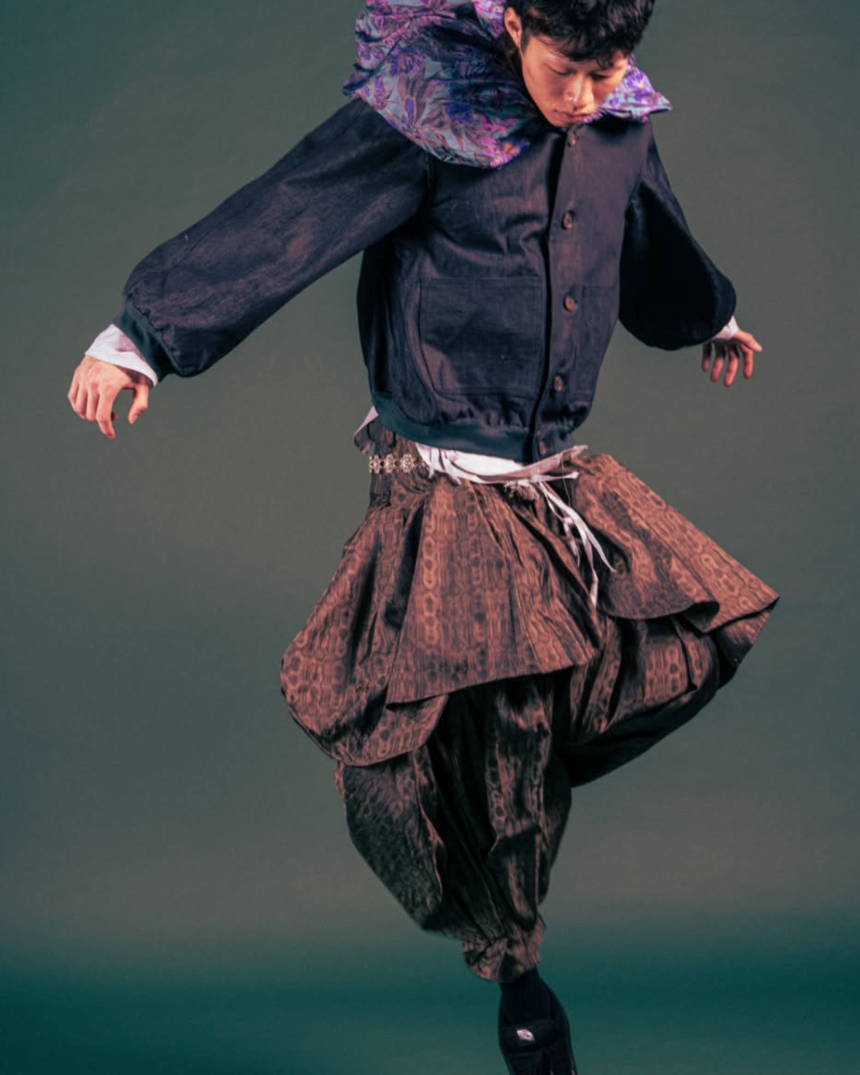
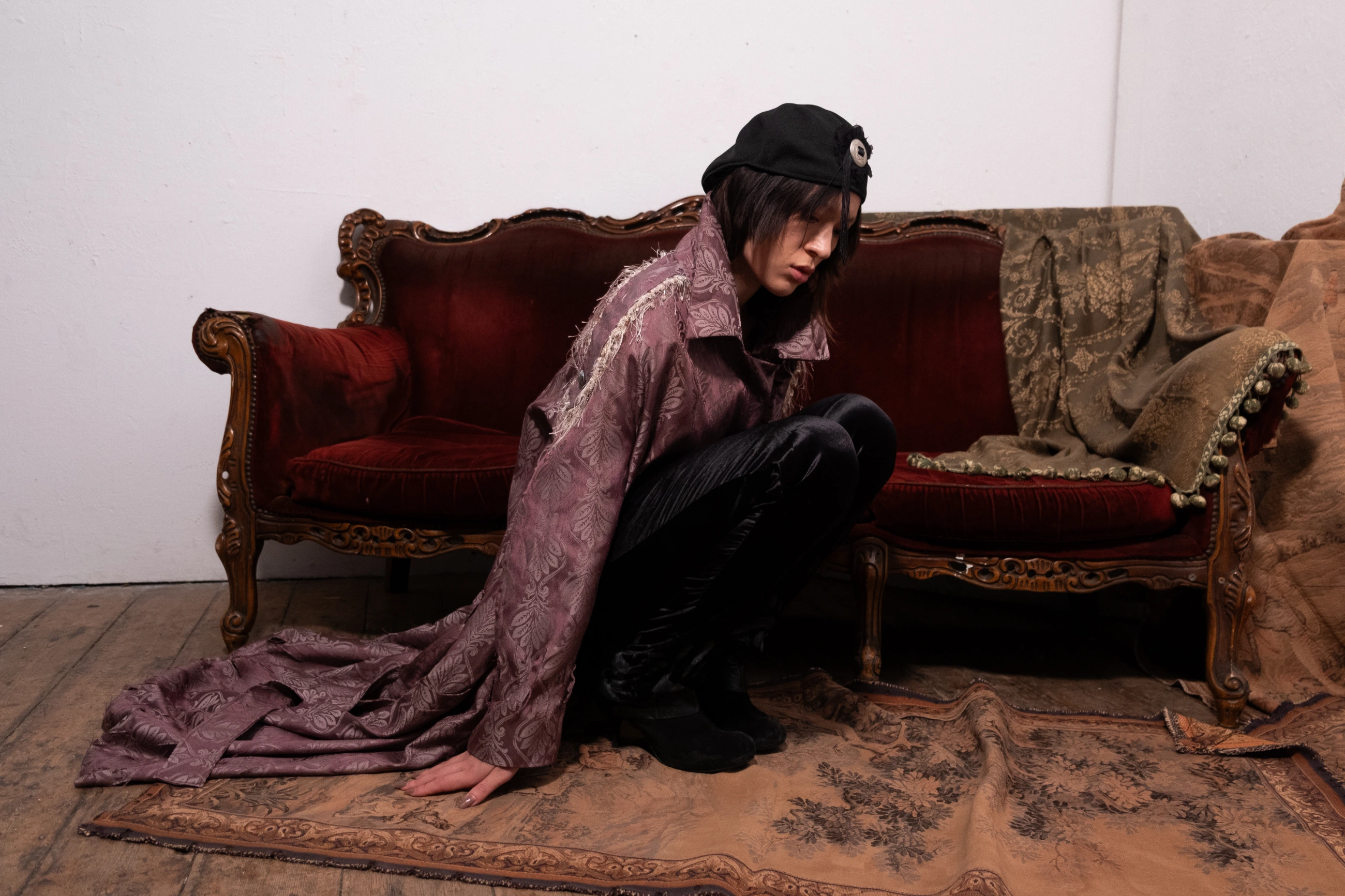
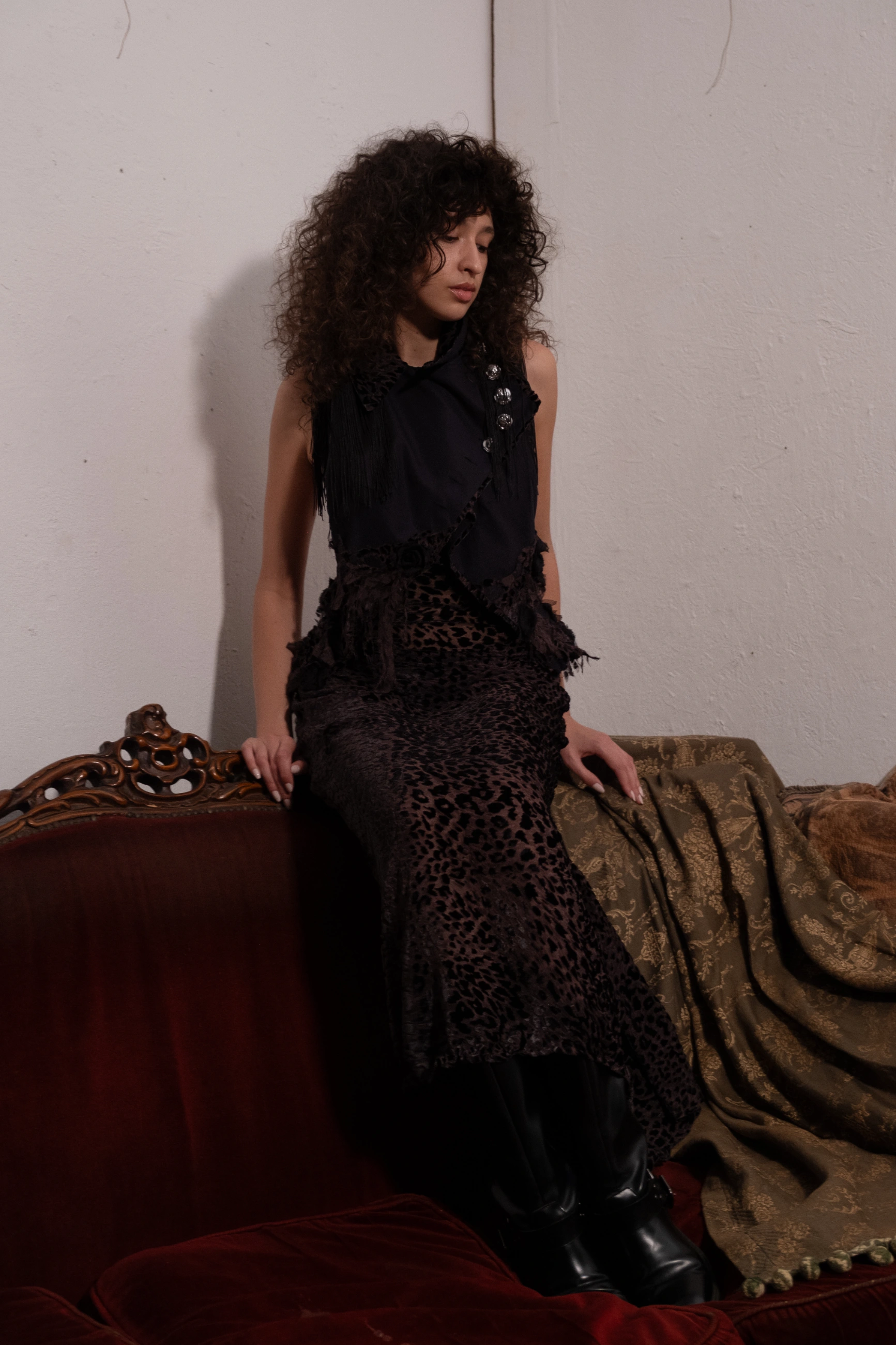
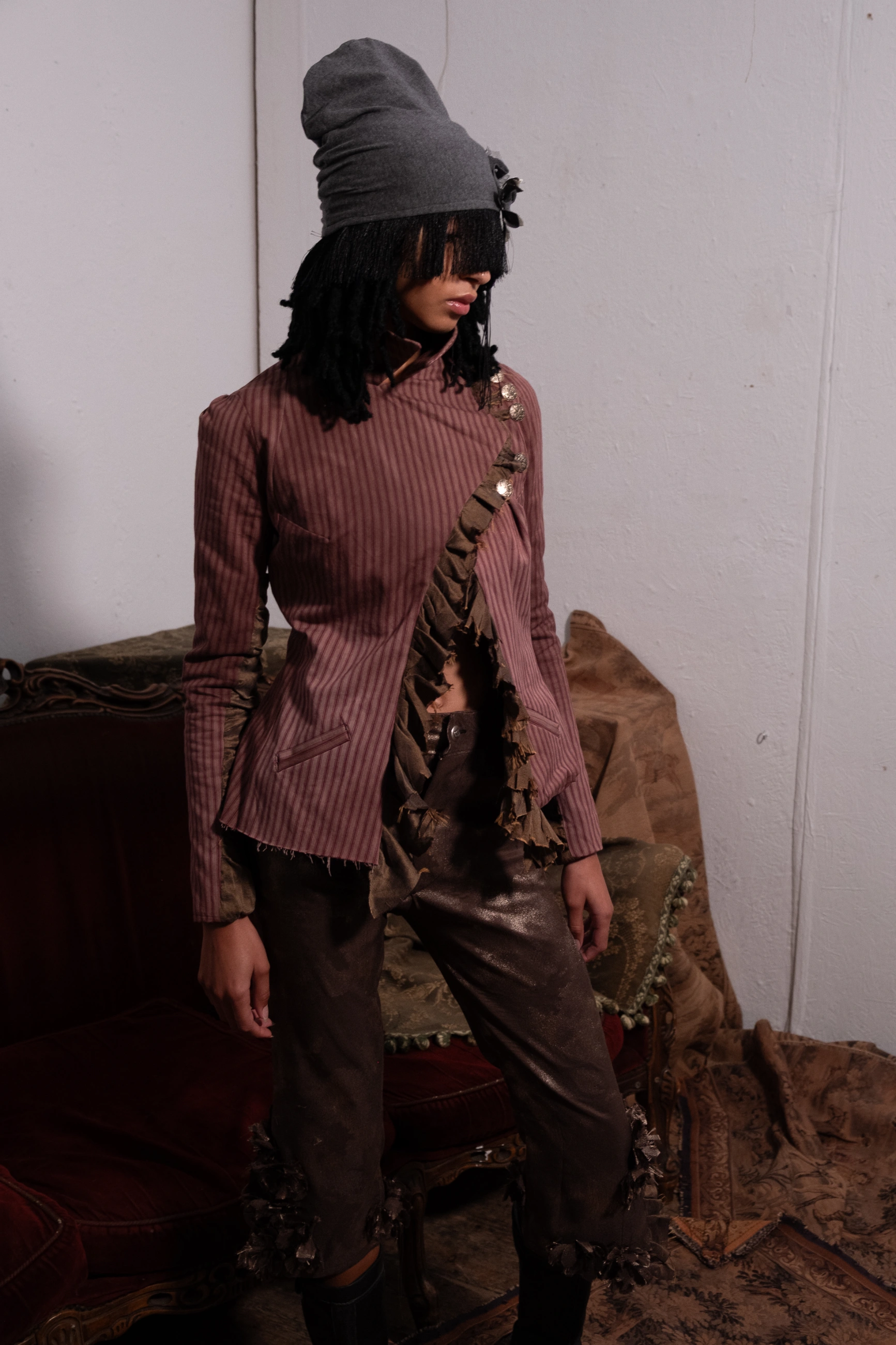
'Ain’t Nice' took the garments most closely tied to male archetypes and aggression, the uniform above all, and ran them through the look and politics of the anti-war and hippy movements, so that frills and fringing sat against dirty shoes and cheap sunglasses while upcycled taffeta and hand-dyed silk carried a kind of nonchalance that pushes against the neatness London so often rewards in its younger designers.
The collection picks up a thread that has run through Turunen’s work since her Central Saint Martins MA Womenswear graduate collection Nightwalk showed in Spring 2025, and which came into sharper focus with Girls of the Year, the SS26 show she staged in a Hackney warehouse under sodium street lamps salvaged from the M6, where the finale saw a model stumble down the runway in a distressed silk dress with a cigarette in one hand and a plastic bag of shopping in the other.
In the time between those shows she has made custom tour pieces for Celeste and The Last Dinner Party, whose frontwoman Abigail Morris performed live at Ain’t Nice over a soundtrack built around Viagra Boys, and reached the final of Prada’s design competition last November, presenting her work in Milan to Miuccia Prada and Raf Simons.
Turunen has said that what interests her most is the shifting line between vulnerability and strength, and how much of that line is drawn by what people wear and who gets to wear it, which made Ain’t Nice feel like her most direct statement on the subject so far. Gabriel Winter asked her three questions about how the collection came together and where it leaves her heading into next season.
- 'Ain't Nice' takes the darker 'modern uniforms' – corporate dress, military wear, the codes of aggressive male archetypes – and runs your own sense of girlhood through them. When you're reworking a uniform, where's the line between subverting it and simply wearing it? Were there pieces you pulled because they tipped too far one way?
I’ve long been interested in how clothing can divide and unite people, and how, through history, an item can gather layers of meaning, so the experience of seeing it today is so different from what it would’ve been 50 years ago. I think this line is exactly something I wanted to explore throughout the collection. That line I found also feels like it varies from one piece to another.
To me, I think ultimately a lot of the connotations come through styling and the attitude of the wearer, the hair and the makeup, the music. It was interesting to see when the garments become too abstracted from their original source, and this subversion is completely lost. I think colour and texture were to me an obvious place to start, but with some pieces - like the ’leather’ jacket (in look 3, made out of kitchen towel cotton) I tried making it not black, but I realised that the association would disappear too far; I think the whole idea of the jacket is that it has to be black.
So, kind of thinking about what is the essential element of this garment, or the pairing that creates these associations, I spent a lot of time thinking and trying different approaches
Often to be ’respactable’ you’d wear a muted palette, and the lenght of trousers and skirts is very specific too in formal wear. I wanted to challenge myself and see if i could still evoke some air of ’respectability’ and ’authority’ even in clashing colour combinations.
What I didn’t want to use was camo, because it would’ve felt too obvious and distracting from the whole idea. I researched camo patterns used worldwide and found that some of them resemble leopard print (so I used that). I also didn't want to include any badges, patches, or symbols; I think they would’ve taken away from the subtlety again.
- The collection grew out of a feeling of powerlessness about the state of the world, yet you looked back to the anti-war movements of the 60s and 70s rather than to anything current. What does that era give you that today's protest imagery doesn't? And do you think clothes can still carry protest now, or is it closer to comfort?
I wanted to look at the 60s and 70s because I feel that alongside the protesting for ’actual’ issues, I think there was an entirely other level of silent protesting in the lifestyle as well. This rebellion towards many capitalistic values that have now seeped into even everyday life. The kind of corporate speech being used more and more in ’regular’ conversations, maximising one's time and appearance for gain, having to excel and optimise even the mundane. And of course - the 60s and 70s were before my time - but from the arts of that era, writing, film, music, etc. And people's stories, it feels that there was quite the opposite. Also, it’s just disturbing that people have been protesting the same things for so long (way before the 60s too) regarding the climate crisis and wars, and yet here we are again and again.
And I think clothes absolutely can; I think they always will. To me, what is quite rebellious today is wearing whatever you want, not brushing your hair! Having old, wrinkled clothes, repeating the same outfit, wearing colour, and not being so presentable. Dressing for what you’re doing rather than how you’ll be seen.
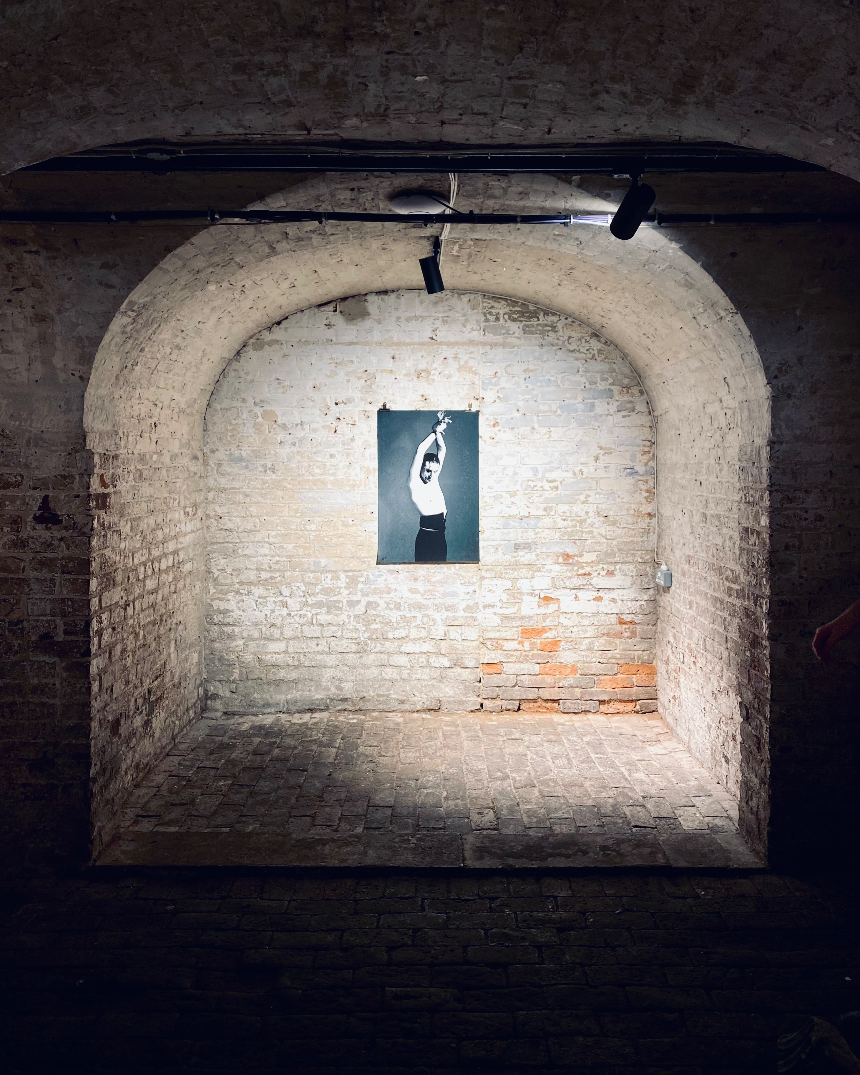
- For your first season on schedule, you chose an intimate presentation – the bunker-like set, the vintage furniture, Abigail Morris performing live and closing in the final look – over a runway. Why that format, and what did you want people to feel in the room that a show couldn't give them?
I mean, being an independent designer, I don’t really have any money. And putting on a show itself is quite against all financial advice in that sense. But in a world that’s increasingly digital, I really think intimacy and doing something together is something you cannot experience from afar, and I think in today’s economy, to prioritise something even if it’s not financially ’smart’ is a statement of intent on its own. My work has always been equally to the clothes about the world and story behind them, so where they exsit is just as important as the clothes.
Designing is quite lonely too, as it’s just me at the moment, so being able to bring in a community is to me a huge release, and to be able to work and see the collection through the ideas and eyes of others. It makes it so much more alive.
When I was younger my dad once said to me that if there’s something you cannot hide, you should accentuate it. So I wanted to lean in to the gritty, the rough the homemade creativity. I don’t want art to become something only the wealthy can consume and make. I don't want to pretend to be, and to pretend the brand to be something that is not, and I have no shame in that.
So I wanted the show to feel like you’ve stepped into a makeshift bar, where you don’t quite know what to expect, like in Fassbinder's film ’Marriage of Maria Braun’. This escape with scattered tables and worn furniture, wine-stained tablecloths, and strange characters. And closing the show with ’Army Dreamers’ sung by Abigail [Last Dinner Party] felt like a natural ending, something to bring the energy back to the original sentiment behind the collection. But also as a little gift for all the people who took the time to come see an emerging designer. To give the viewer this experience they wouldn’t get anywhere else, something that can only happen then and there and can’t be seen anywhere else; not online, not in a recording. Just there.