IAMISIGO MADE SACRED ECOLOGIES OUT OF THE CONTINENT ITSELF
Bubu Ogisi built her SS27 collection from banana fibre, sisal, wood, glass and reclaimed metal, organising it around a Luba memory board. Asthetik Magazine was on the scene to watch the brand's presentation unfold.
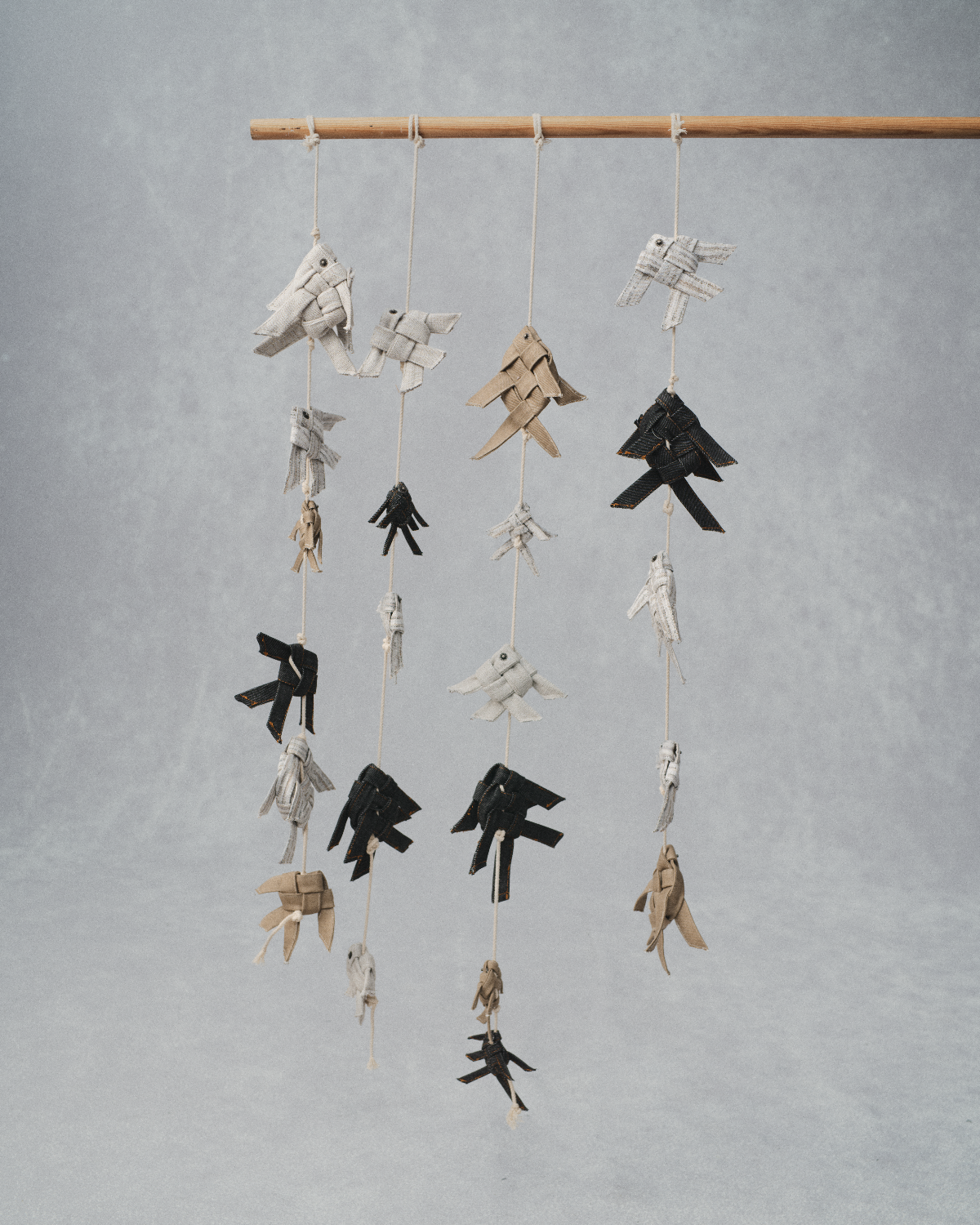
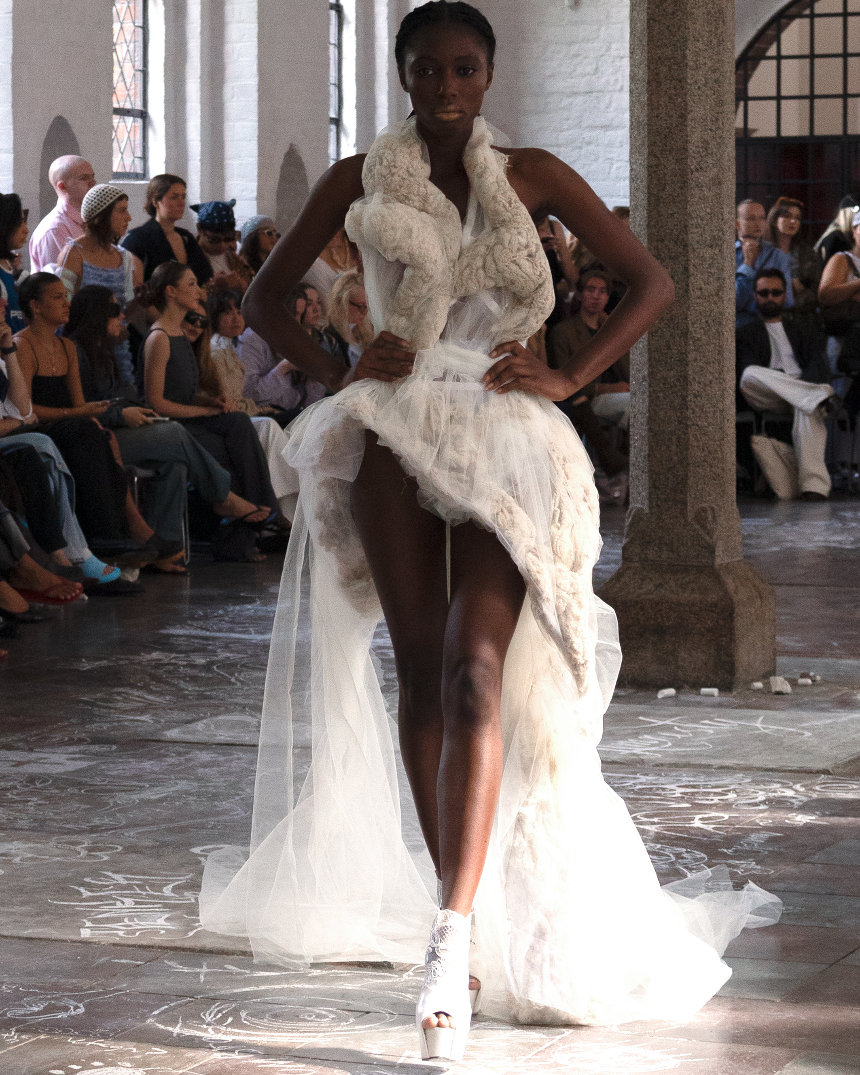
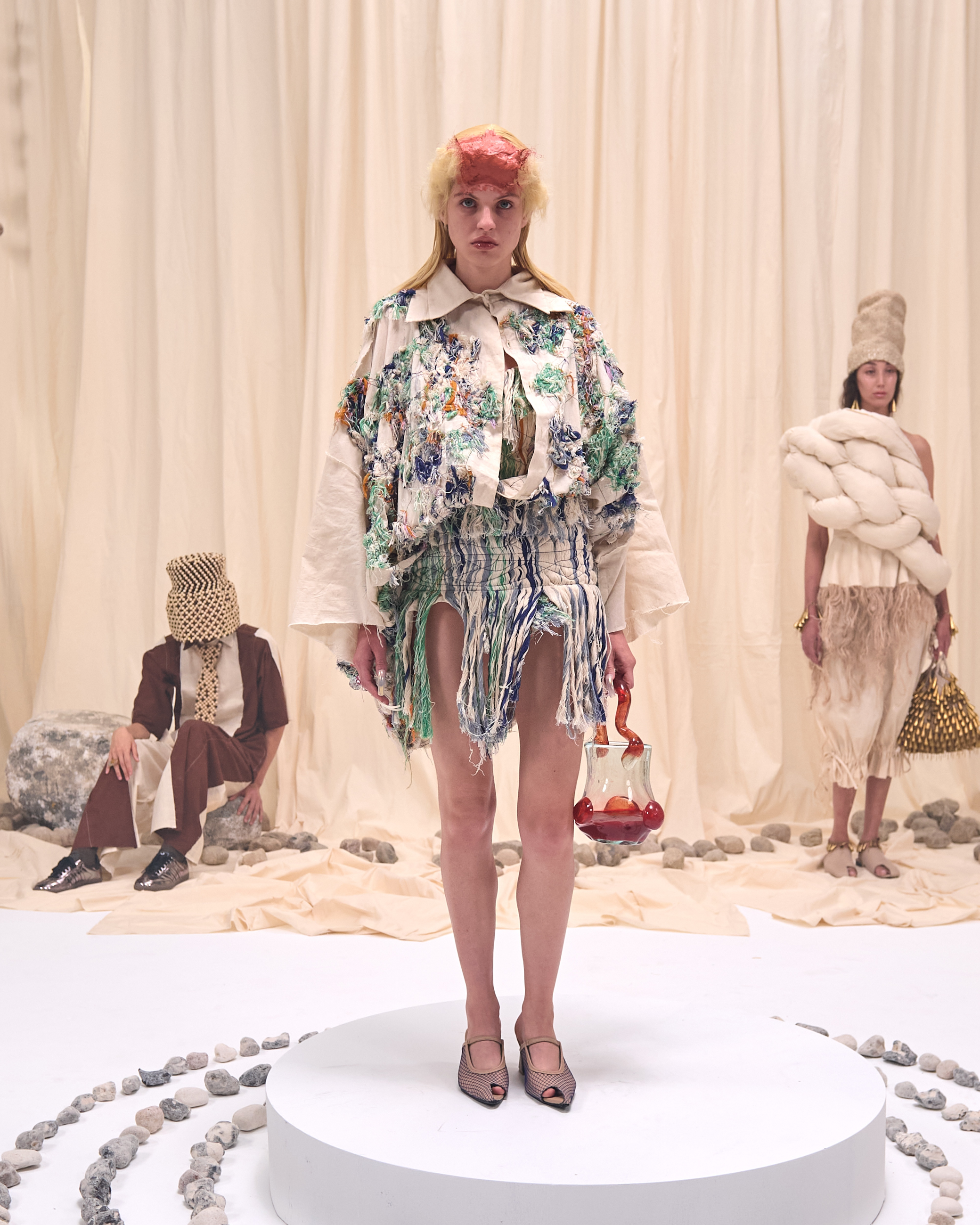
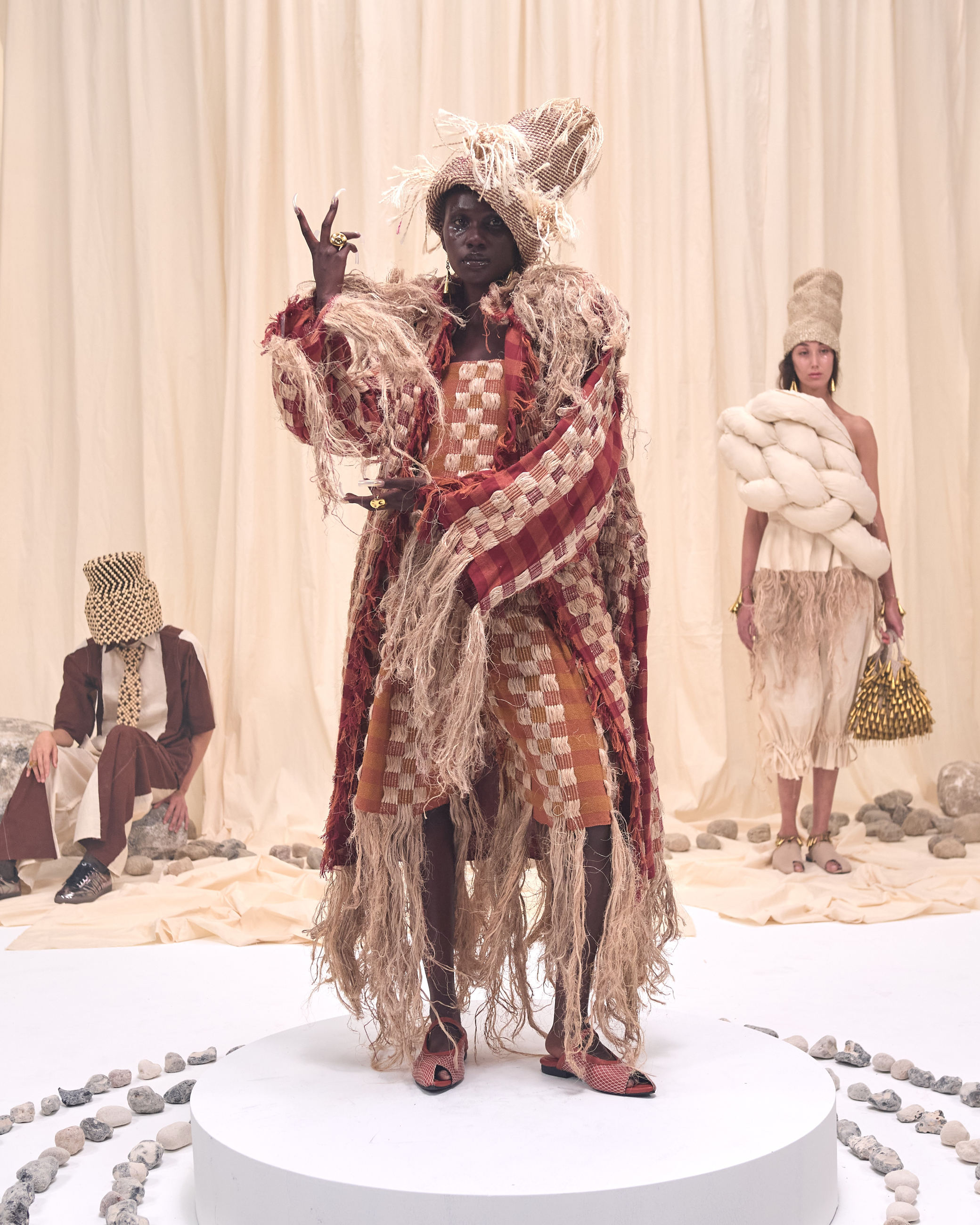
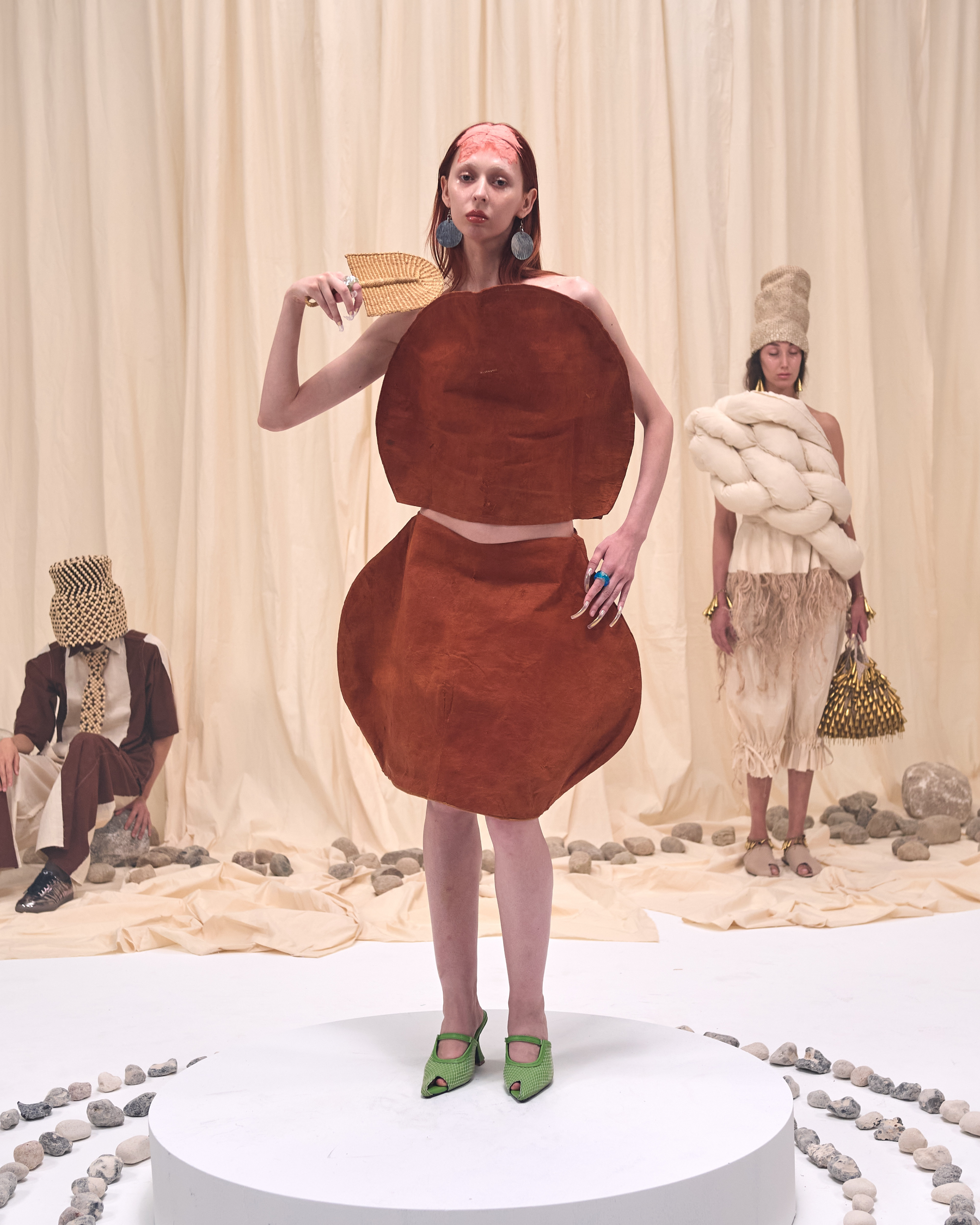
For Sacred Ecologies, Bubu Ogisi made almost everything from material that already existed or had grown. Banana fibre, sisal, reclaimed cotton, wooden beads, recycled glass and recycled aluminium, all of it gathered across the continent, woven in Kenya with natural dyes, with yarn offcuts folded back into the textured pieces so the process closed on itself. Nothing went to waste.
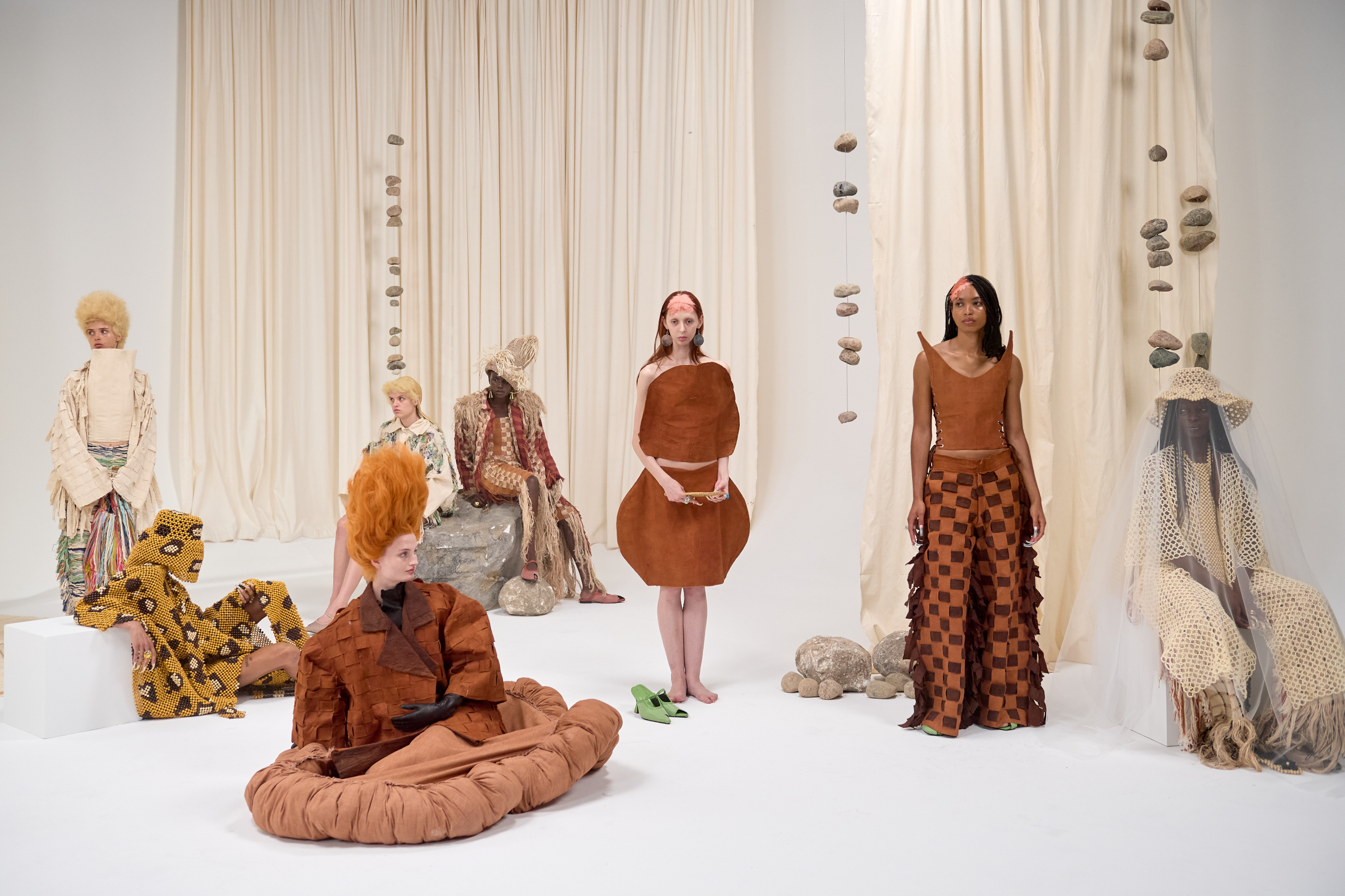
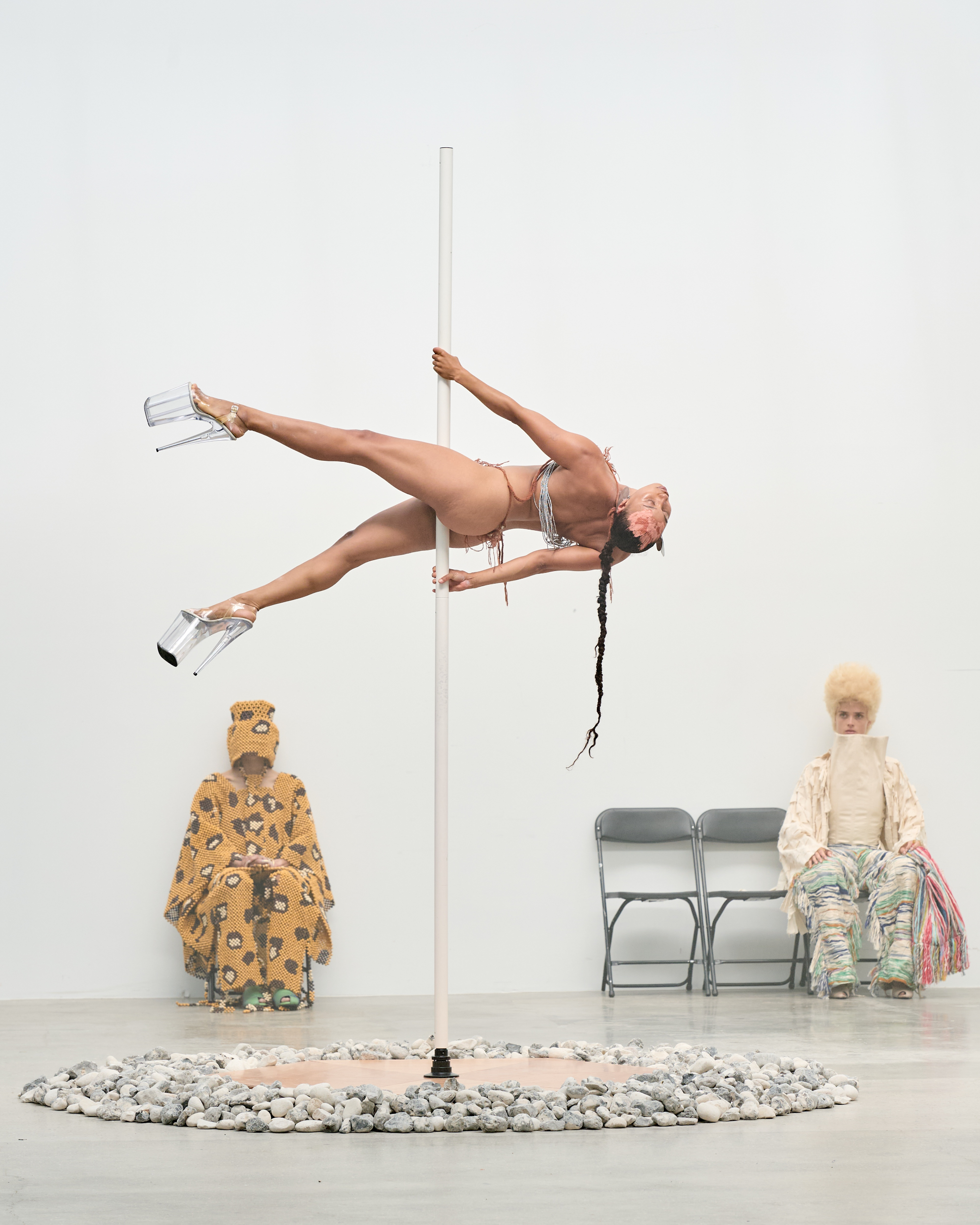
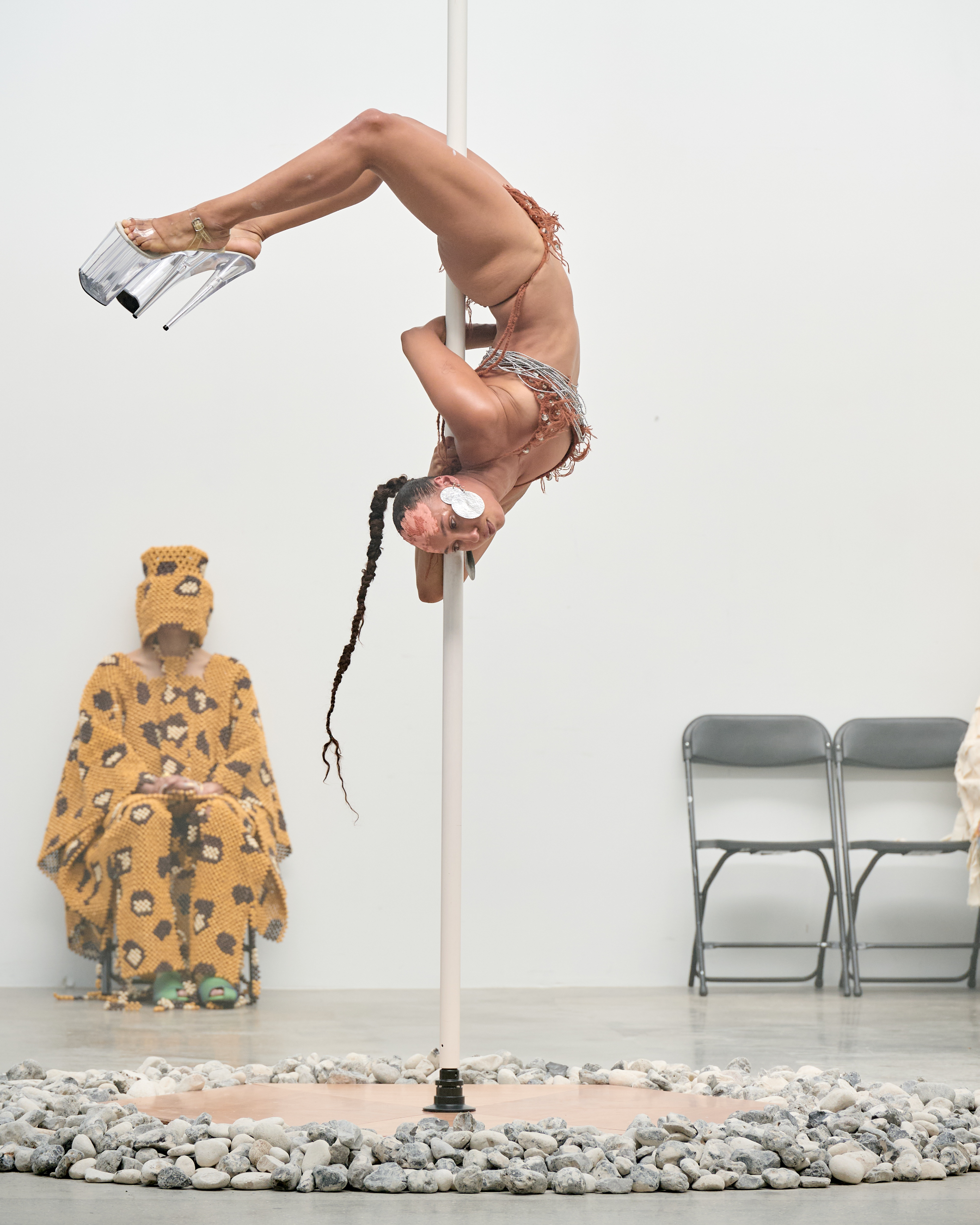
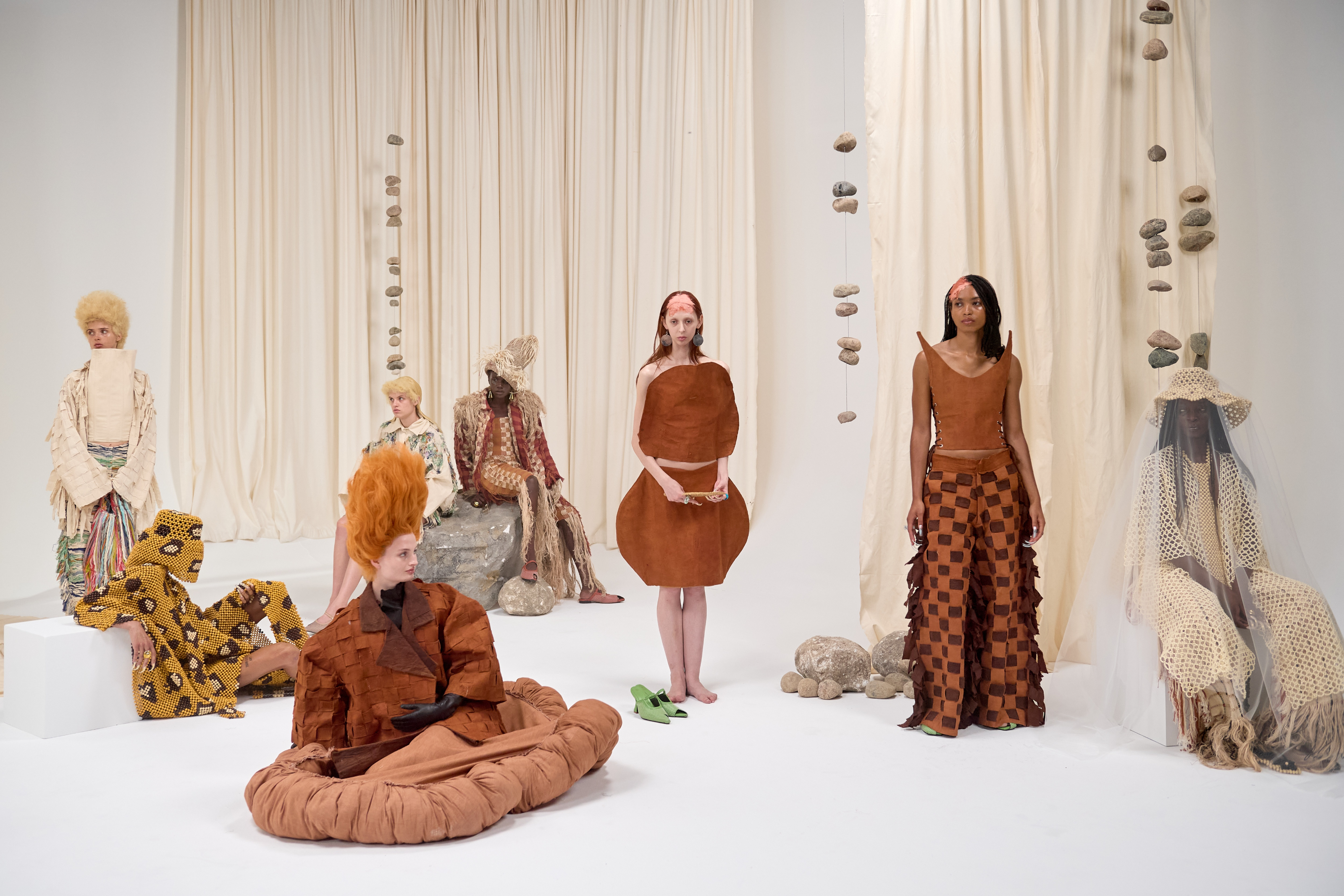
The presentation was staged as a landscape rather than a runway. Cream cloth was draped floor to ceiling and laid across the ground, with real stones set out on it, and the models stood within it, still, so that the eye could travel at its own speed.
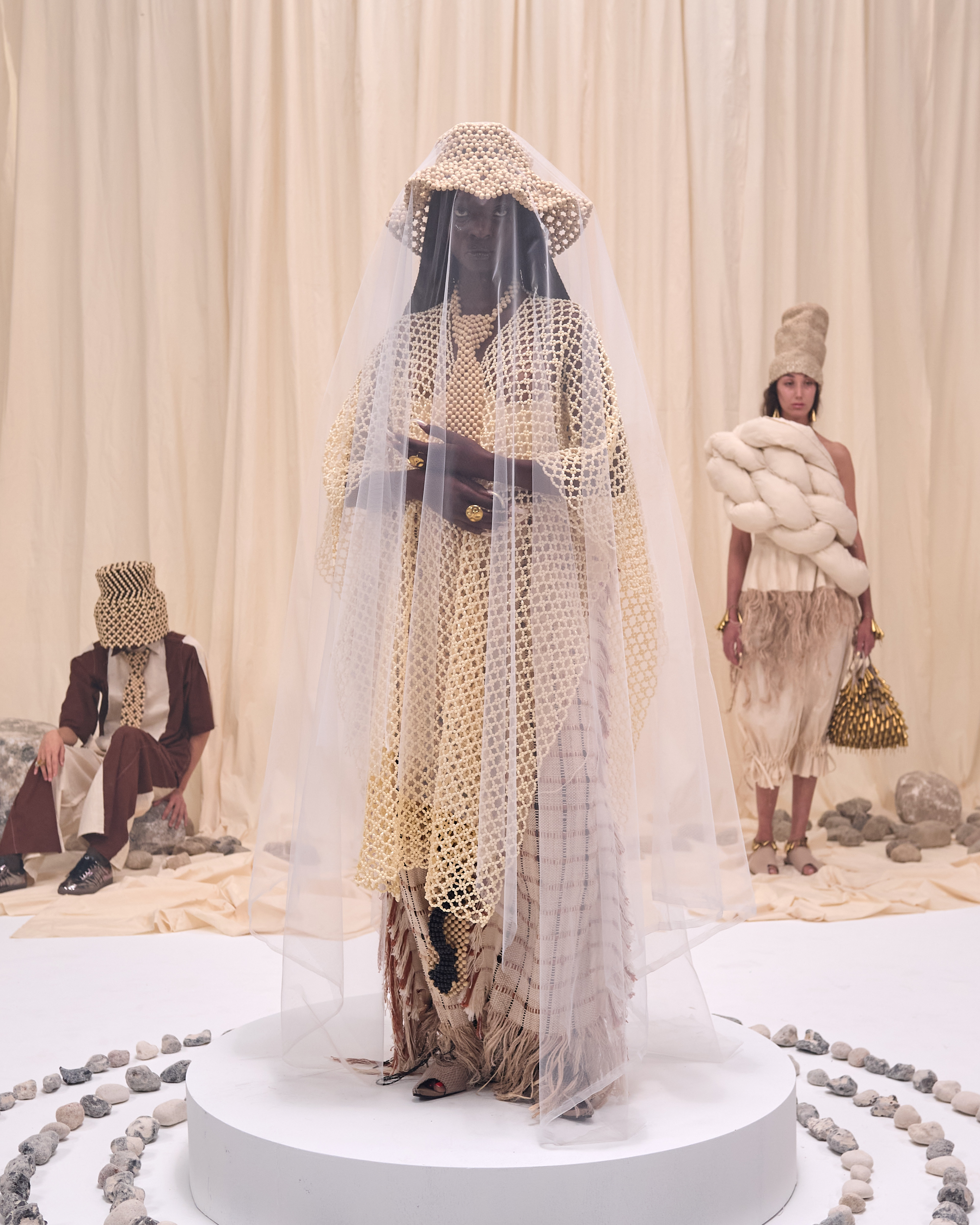
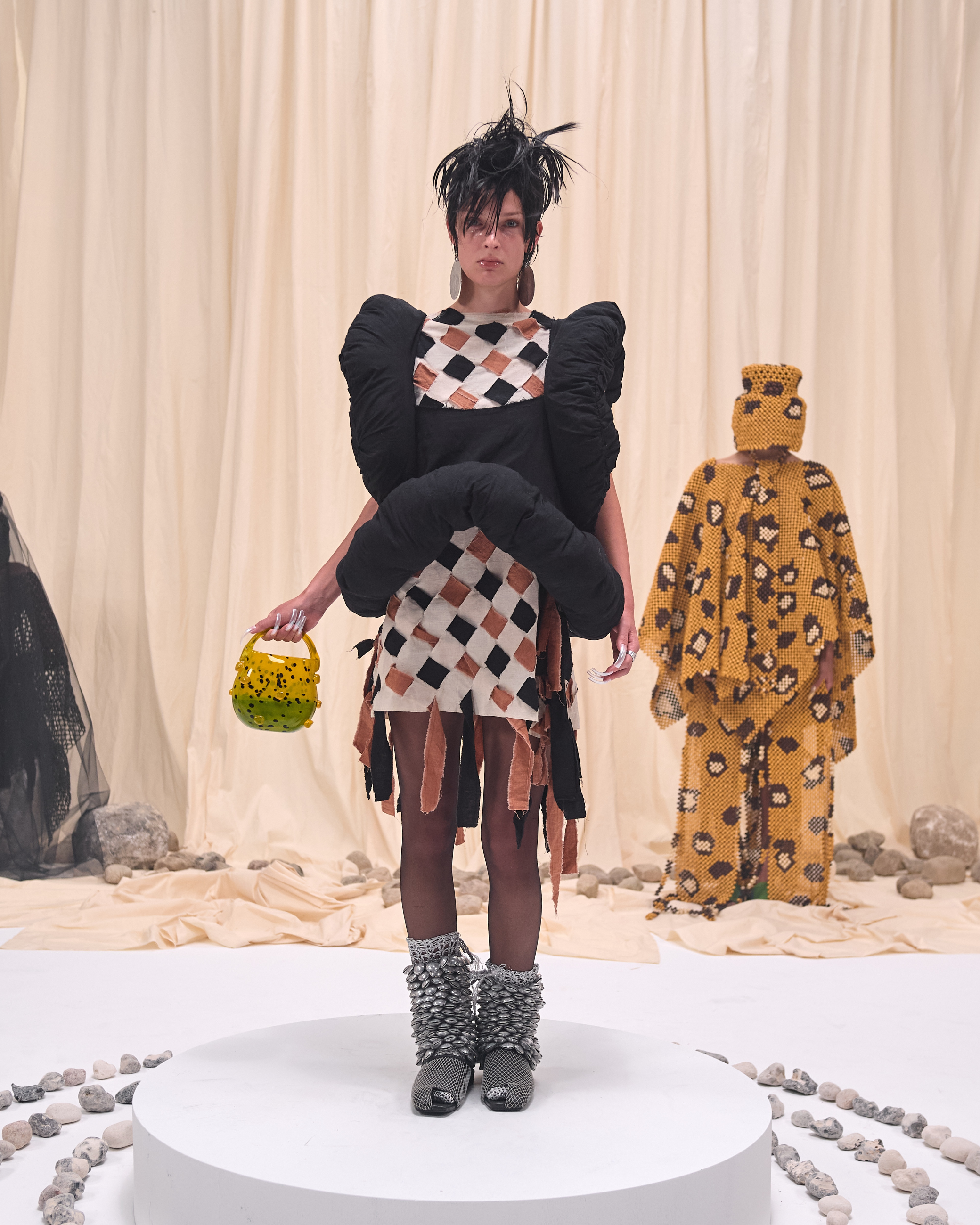
The clothes rewarded that. One figure stood entirely enclosed in strung wooden beads: a full-face beaded hood with a small ridged crown, a wide beaded cape falling to the elbows, and a beaded column beneath, all of it in ochre and gold with leopard rosettes in black and cream worked into the bead grid like pixels. Another wore a densely beaded bucket hat and a floor-length sheer veil that fell over an open crochet cape-coat in undyed fibre, two round gold ornaments at the waist catching the light through the tulle. A third came in a tall woven crown and a great plaited coil of cream rope wrapped across one shoulder, over a skirt of raffia fringe.
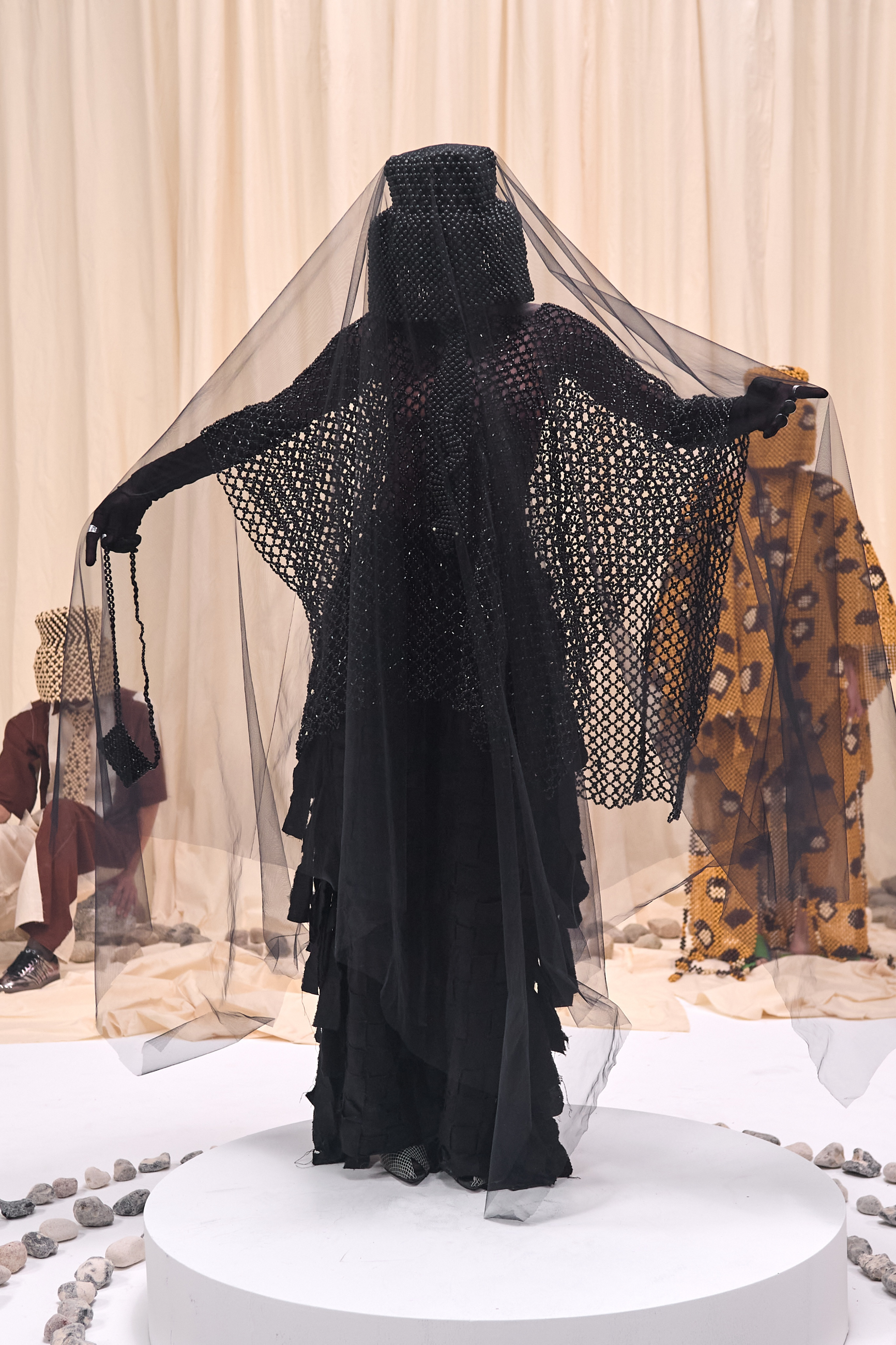
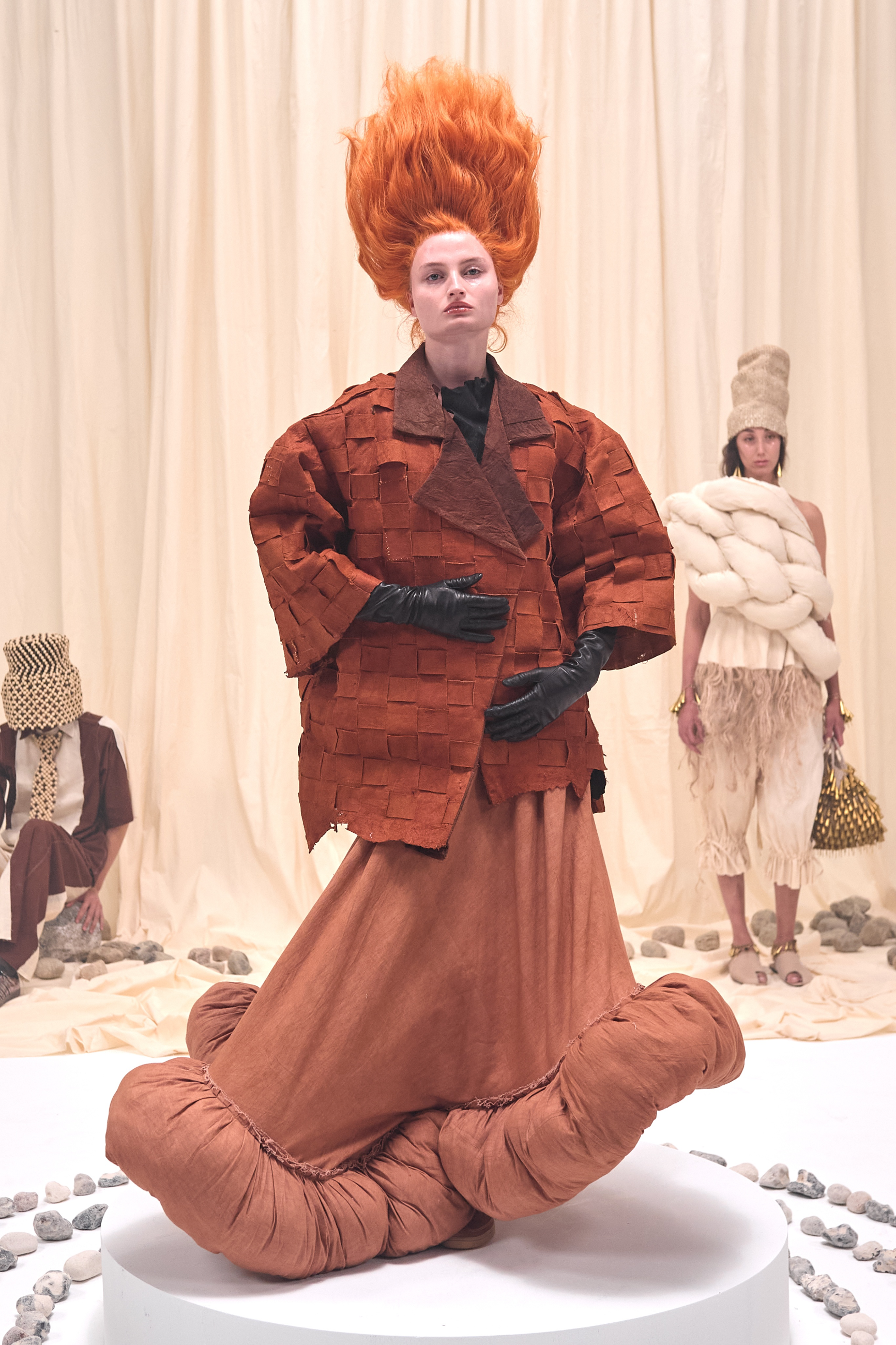
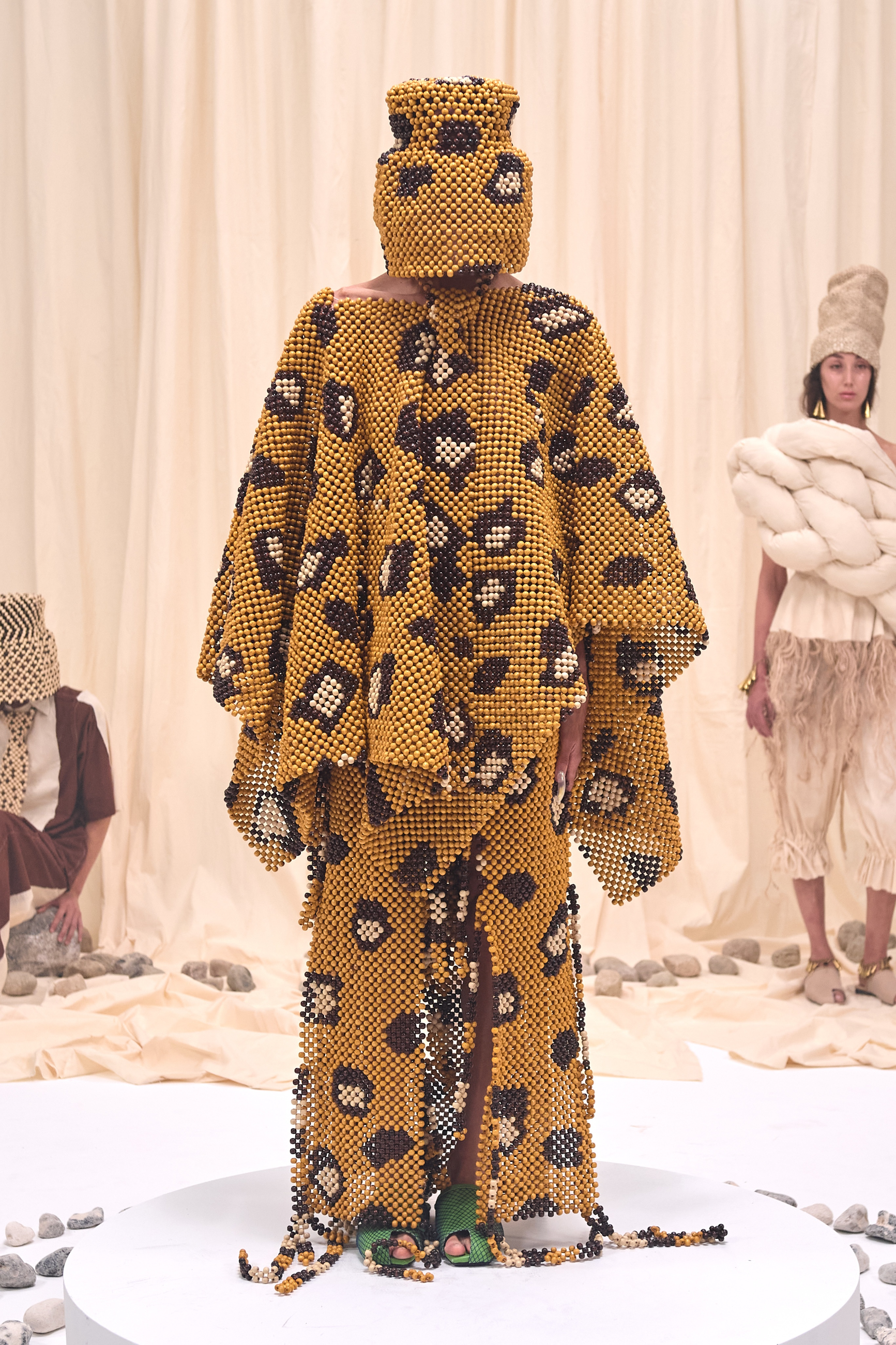
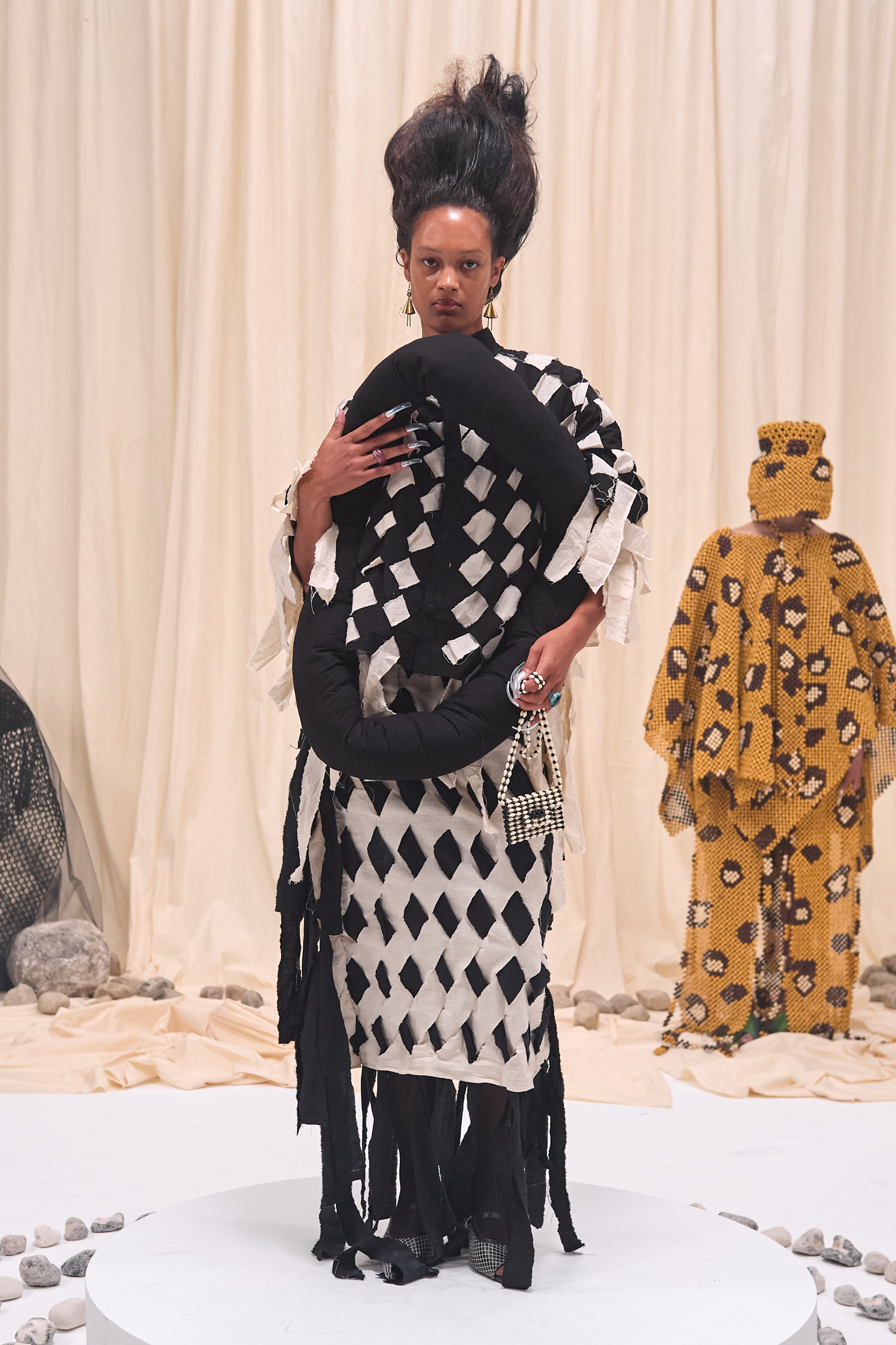
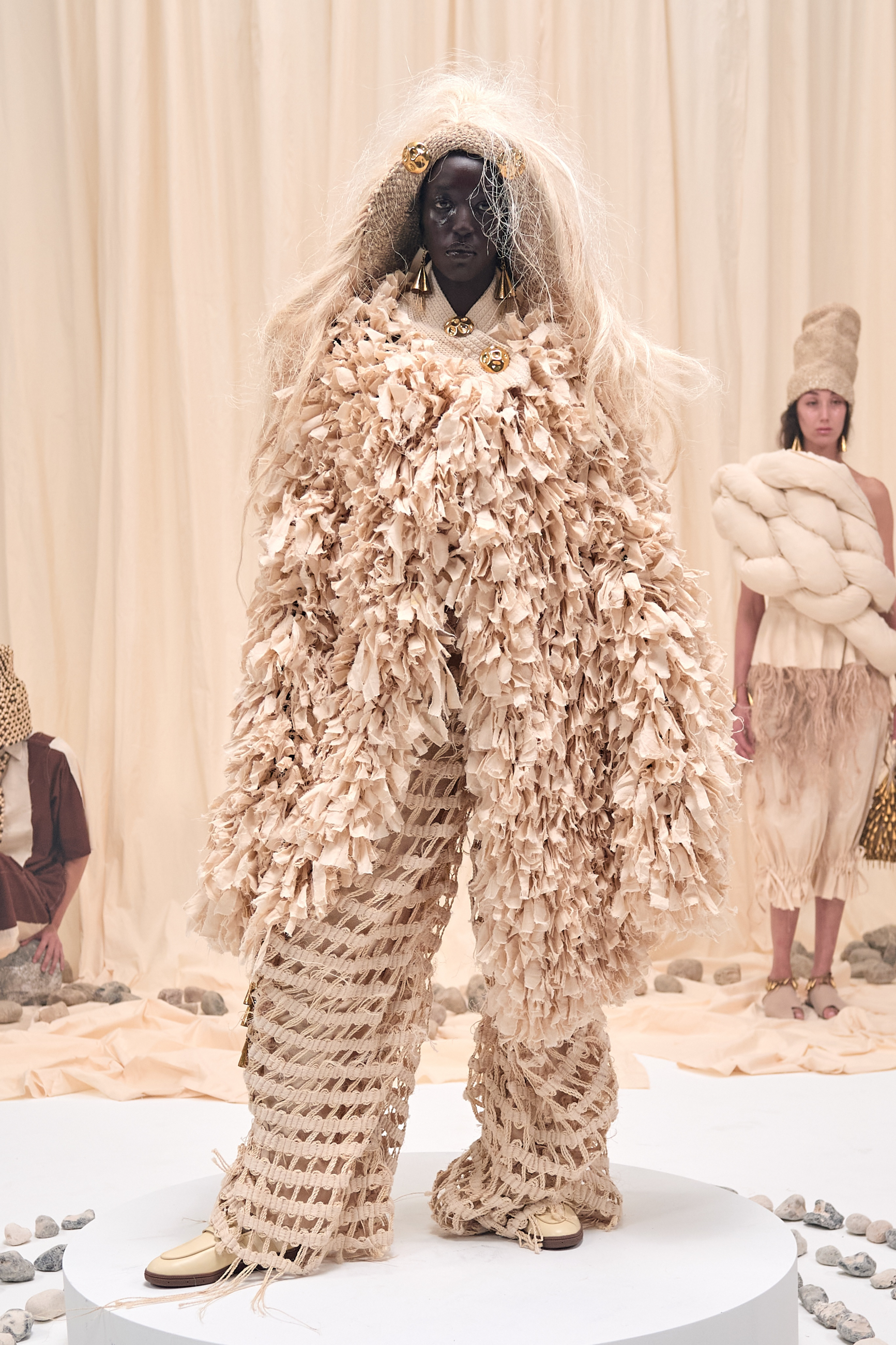
The organising idea is the lukasa, the hand-held object associated with the Luba peoples of what is now the Democratic Republic of the Congo, on which beads and carved form hold political history, territory and inherited knowledge without a written word. Ogisi built garments that work on the same principle. They keep their information in weight, in repetition and in surface. Loose thread and knotted fibre were left where they fell and given real structural work, which is the opposite of the usual instinct to smooth everything down.
The politics come from Ngũgĩ wa Thiong'o's Wizard of the Crow, which Ogisi read alongside the craft research, and which treats the ruin of land and the control of people as one system. Her own summary is brief and worth sitting with. "The focus was mainly how to reverence the land in everything we create." Reconstructed adidas pieces ran through the collection too, the sportswear absorbed into the craft language rather than the other way round.
IAMISIGO has worked across Lagos, Nairobi and Accra since 2009. It took the Zalando Visionary Award in 2025 and reached the LVMH Prize semi-finals this year, and it treats African craft as a knowledge system that was never waiting for anyone's permission. What stays with you is how much a garment can carry when it holds onto where it came from.